Twitter Taboos

If you’re thinking about being one of the masses who tweets and twits, think before you start your running commentary. Ad Age reminds us in a recent article that not every moment of your daily life should be broadcast into space, particularly when dealing with confidential information. The article also discusses what they see as a mistake by most advertising agencies who have Twitter accounts but aren’t making use of them.

“Asked what gives, a Euro spokeswoman said: ‘We’re developing our Twitter strategy and in the meantime want to hold onto the name. It’s a Catch-22: You don’t want your Twitter handle stolen, but you also don’t want to start using it before you’re really ready.’ Whatever the case may be, save for a few shining examples of shops that “get it,” agencies need to catch up with their clients — and fast.” – Ad Age

The story then goes on to remind us about the secrecy of proprietary information concerning clients. Apparently the interns at Grey New York are being a little too outspoken with their campaign information and their early morning “thinking about tequila.” See the Grey New York interns Twitter feed here.

So what do you think? Is there an obligation by large companies to tweet if only to prove they can keep up with the trends? And, if that’s the case, is every trend necessarily appropriate? What if there’s nothing juicy to tweet about?

If you just can’t help yourself, here is some advice from Ad Age on maintaining your credibility and keeping people interested…

Don’t over-promote. Of course you want to use Twitter to build your agency’s brand, but don’t hit people over the head with a litany of press releases.

Be human. Attach a personality — a name, a photo — to your Twitter feed and balance promoting your brand with some personal updates so followers can get a sense of your company culture.

Remember, Twitter is public! A client probably won’t appreciate your tweeting “Ouch, got a nasty hangover” when you’re late to the meeting.

Keep clients looped. Be sure to share your agency’s Twitter strategy with your clients. Get permission if you want to mention one by name, and don’t forget that a lot of your work is proprietary. Don’t let a careless misstep to cost you the relationship.

Listen. Know what people are saying about you on Twitter. Use search.twitter.com or an application such as TweetDeck to monitor the chatter.

Respond. The point of being on Twitter is to engage with people who know your agency, as well as those who don’t and want to learn more about you. If followers comment on your feed or send you direct messages, get back to them promptly. Remember, it’s a conversation.

Keep expectations in check. A Twitter strategy does not make your agency “social.” Try out tools internally to share knowledge, exchange ideas and — best yet — encourage learning that you can pass along to clients.

Identify impersonators. Accounts purporting to be someone or something they’re not violate Twitter’s terms of service. So if someone’s got their paws on yours, let Twitter know.

Evan Kafka in Arrive Mag

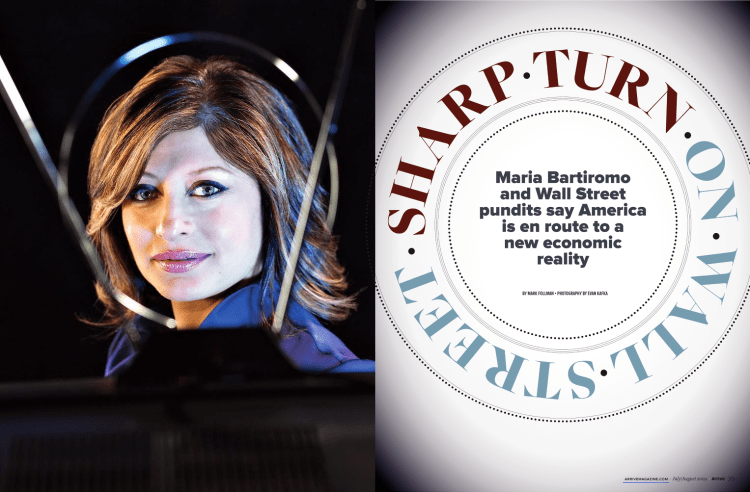
Check out Evan Kafka’s portrait of Maria Bartiromo in the new issue of Arrive Magazine! See Evan’s full portfolio here and here.

Evan Kafka

Evan Kafka

Contact assignment rep Jacqueline Bovaird with questions or portfolio requests.

212 – 462 – 4538  |  jacqueline@glasshouseassignment.com

http://www.glasshouseassignment.com

NEW Q&A: Equipment

Q & A:

Was there a piece of equipment that saved the shoot?

The most valuable thing to have on a shoot when you hit a snag is the ability to be creative and resourceful. I’ve put this question out to a select group of photographers and stylists to see what has gotten them through some tough situations. What worked for you? I’d love to hear your comments here to emails at jacqueline@glasshouseassignment.com!

Thank you so much to Caroline Hirsch of National Geographic Adventure for suggesting this question!!

– Jacqueline Bovaird, Glasshouse Assignment

Spencer Jones

SPENCER JONES, PHOTOGRAPHER
I was shooting the GO chair, a beautiful metallic silver, stacking chair. I planned on photographing it on silver foil paper, laying sheets of the paper down for the surface and rolling it into tubes for the background. After spending most of the shoot day prepping it came time to place the chair and set up the camera. I soon realized that we didn’t have enough background. I needed to find a solution fast. I remembered having a 4 x 8 sheet of mirrored plexi left over from another shoot. We slid it in under the chair for the surface. The mirror reflected the background, which gave us this wonderful silver surface, and definitely saved the shoot.

Nikki Wang

NIKKI WANG, HAIR AND MAKEUP STYLIST
The makeup which saved the shoot, would be concealer. One time, I flew to some island and my equipment didn’t arrive, but I had to do make up. Luckily I had a small palette of concealer in my personal bag, off course using to correcting under eye dark circles, but using more of pinker color for the cheeks, dark color for eye and eye brows…saved the shoot. For hair, I think a narrow flat iron, because if you can have a good control of your movement, you can not only make the hair strait, you can also curl the hair.

Miha Matei

MIHA MATEI, PHOTOGRAPHER
Having a back up camera! I was on a photo shoot in Brazil last year in a rain forest and my main camera completely died on me. I had a back up camera and was able to switch it without stalling the production, but it could have been a disaster had I not had a spare camera.

Terese Bennett

TERESE BENNETT, MAKEUP STYLIST
Believe it or not “Hollywood Fashion Tape,” which can be found at any lingerie store, is what saved the shoot. The real use of this product is to tape your clothing to you so your bra wont show.When I use a lot of glitter for shoots and have to take the excess off the face. I was on a shoot in upstate New York in the middle of nowhere. We were on a farm and shooting a high-fashion story with a not-so-high-fashion-stylist. In the middle of the shoot, the stylist was pinning the dress and ripped a hole right down the middle of a $20,000 gown (not mentioning the designer out of respect). Normally, you could safety pin the dress, but with the way it was made it would not lay flat on the model’s chest.  Everyone freaked out because not even Photoshop could have saved this escapade. I happened to have it in my kit from a shoot I did the day before. So when I looked in my kit after an hour of contemplating, and a pissed topless model, I realized I could use the tape that I use for glitter. It actually hadn’t dawned on me until I saw some glitter on my face from the shoot I had done the day before. I always love glitter, but that day I loved it even more. Needless to say, my Hollywood Fashion Tape saved the day.

Ryan Schude

RYAN SCHUDE, PHOTOGRAPHER
Coffee usually saves a shoot for me, and jokes, yep, coffee and jokes is all you really need.

Robert Wright3

ROBERT WRIGHT, PHOTOGRAPHER
I am going to venture out in a different direction from gear; gear is the kind of thing that we all prepare for and know how to deal with when it fails. Our inner “MacGyver’s” take over.
My answer is going to be that “ego” saves a shoot. And I am not talking about confidence either. It would be hard to do the job without confidence, although many out there do, I have met a few…so it is not confidence, in fact, ego can save you from a lack of confidence, which should tell you they are not the same.

Ego is what tells you can do the job better than the next person. Ego is what tells you your idea is better than the art directors when it is bad. Ego is what tells you can get something where no one else can. I can’t imagine a photographer who could manage without this. There are too many demands, to many compromises, and too many failures just getting to most shoots that in then end, ego can solve. Ego can also ruin a shoot, which should tell you it is integral to the making of pictures. We have all met THAT person…

Bottom line is that without a firm sense of who you are and what you do (ego), and a “knowing” that it is valuable, none of the external circumstances matter. Tyler Hicks, the New York Times photojournalist in Afghanistan, recently was on patrol and lost his footing and dunked all of his equipment in a river. Then they came under fire in an ambush. He continued to work with a point and shoot that a colleague had with him. Hicks knew his ability to make pictures mattered more than what he was using, and that, in short, is ego.

Stephanie Hanes

STEPHANIE HANES, STYLIST
A level is definitely something that can make or break a shoot, especially when working on a large set. If a prop wall isn’t level, everything that goes on or around it gets skewed and you have to start all over again, which can waste a lot of time. It pays to get that shelf level straight off the bat, not only to keep less holes in your walls or wallpaper, but also keep your digital retoucher happy too.

As always, thank you to everyone who contributed to this month’s Q&A! The feedback has been wonderful and incredibly encouraging. Let’s keep it up!

Keep a look out for next month’s question and email blast!!

If you have any ideas, comments, or if you’d like to participate in our monthly email Q&A, please don’t hesitate to contact me, Jacqueline Bovaird. I am always looking for new voices to add to this evolving discussion.

212 . 462 . 4538 | jacqueline@glasshouseassignment.com

Legally Blind Photographer

Many years ago I met a wonderful photographer who was legally blind. She was determined to keep shooting. She contacted Konica, one of the first camera manufacturer to come out with an auto focus camera. As a result of here new system she was able to continue to shoot and exhibit her work.

Once again I’m inspired by the work of of another photographer who happens to be blind, Kurt Weston

Behind the Scenes: Altered Visions

Kurt Weston, 51,was once part of what he calls “the illusion machine.” As a glamour photographer, he would jet to Europe with hair stylists and makeup artists to transform models and create the appearance of beauty.

Picture 8
The Vision Machine

Now he says he is interested only in authenticity. Mr. Weston’s subjects are the elderly and the frail, with special attention to issues surrounding blindness. Surface appearances do not interest him so much.

What changed his work was an HIV/AIDS-related condition — cytomegalovirus retinitis — that destroyed his sight in one eye and left the other with minimal peripheral vision. In 1995, Mr. Weston was close to death, but new antiviral drugs saved his life.

Picture 2
Do You See the Big E

Today, he is a legally blind photographer.

“I was grateful to be alive, but I assumed I couldn’t do photography,” he recalled in a recent telephone interview from Huntington Beach, Calif., where he lives. “But I learned mobility skills, adaptive computer skills and how to use low-vision devices like monoculars, video magnifiers and thick clear-view glasses to help me see.”

Mr. Weston was shocked when he realized he could photograph again. “I still don’t see very much of anything,” he said, “but I see enough to get by.”

Picture 1
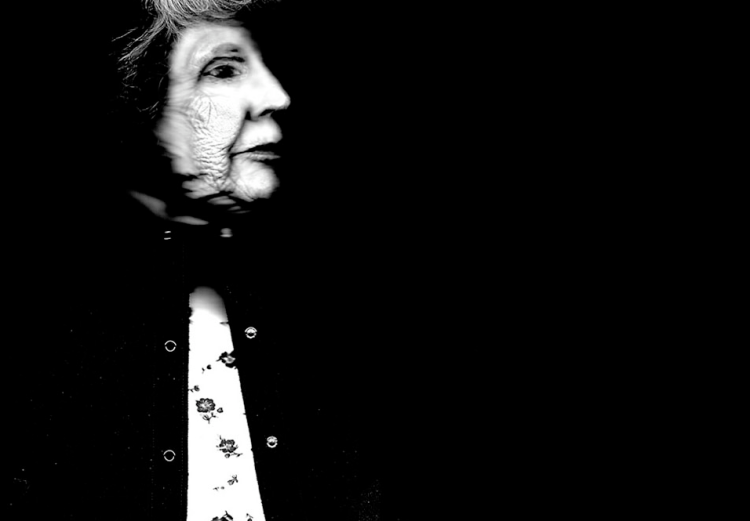
Peering Through the Darkness

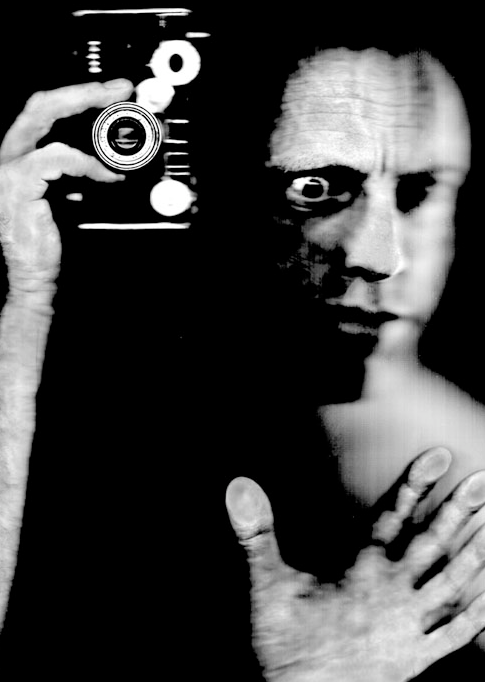
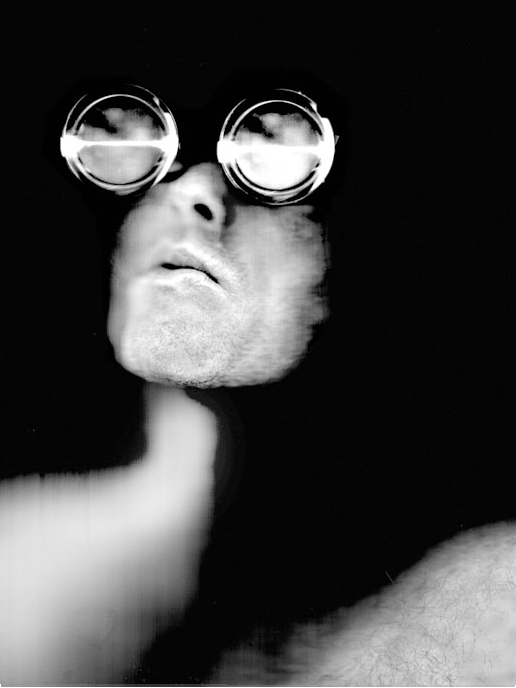
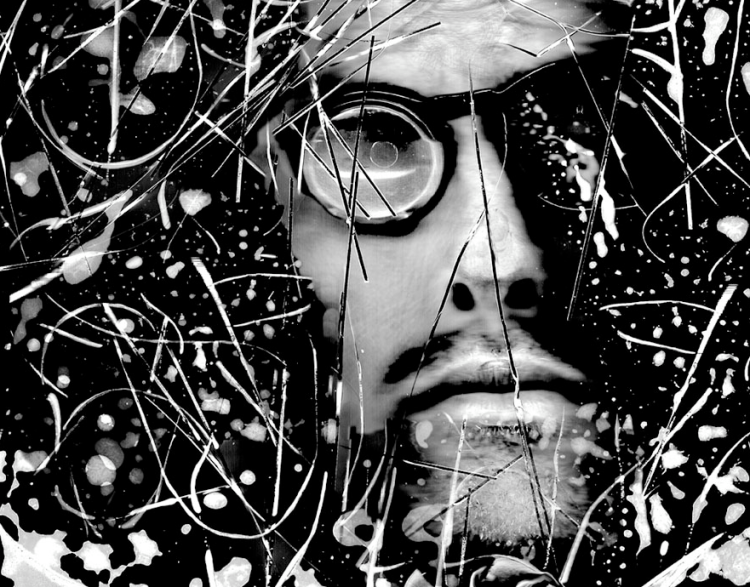
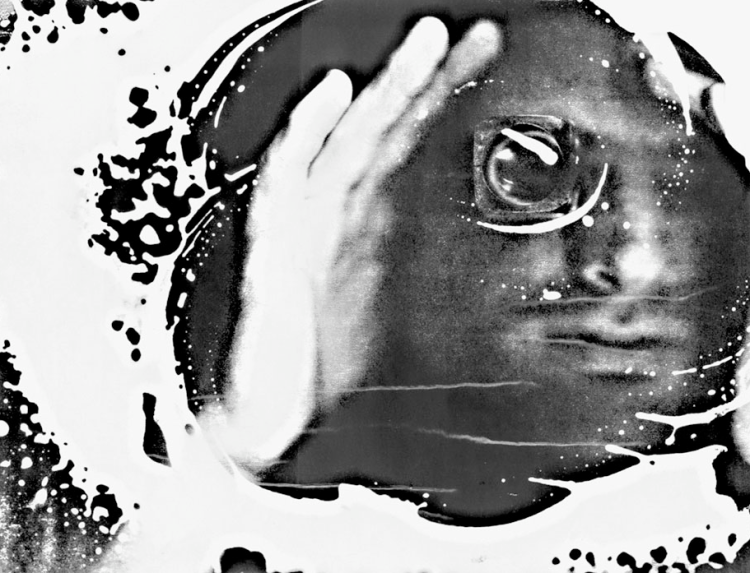
His first major projects were about his own blindness. He started with self-portraits that illustrated the psychological, emotional and physical weight of vision loss. There is nothing glamorous about these images. He lay atop a scanner and dripped foaming glass cleaner onto the surface to create visual disturbance. Some images include the vision assistance devices on which he relies.

Picture 4
Reel Vision

“I try to replicate my vision,” Mr. Weston said. “When i move my eye, I see spiderlike tendrils. There’s nothing in focus or sharp.”

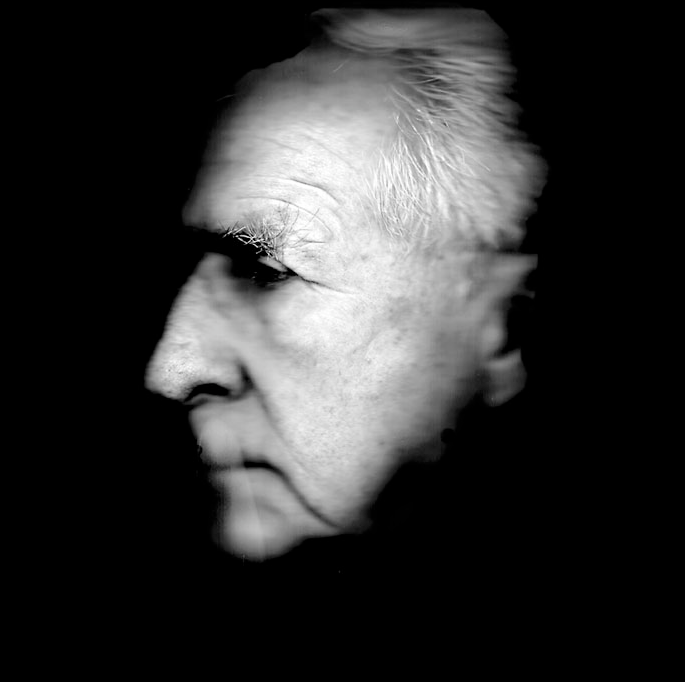
In his next series, Silent Age, he photographed elderly people, using a medium format camera. With a scanner, he combined these images with photographs he took of peeling paint on the walls of Chicago subway stations. Together, they suggest the deterioration that often comes with advanced age. Other images involved subjects, often in their 80s and 90s, laying on the scanner.

Picture 10
Silent Heart

Mr. Weston feels he is unlikely to reach a great age himself because of HIV and the drugs he takes. “The body is like a machine that breaks down,” he said. “It deteriorates over time.”

While the concept of a blind photographer may seem counterintuitive, Mr. Weston is not alone. Many legally blind people photograph and exhibit their work, as Time noted in“The Art and Heart of “Blind Photographers.” There are over 150 members of the group“Blind Photographer” started by Tim O’Brien. The Web site BlindPhotographers.org developed out of the Flickr community.

Picture 7
Floaters

When Mr. Weston teaches photography at the Huntington Beach Art Center, he doesn’t tell his students that he is legally blind. He waits until they figure it out. He says that after their original shock, the students realize he has much to teach them.

Picture 11
Wiser Than Dreams

He helps them develop their vision, just as he has expanded his own.

“I was part of the illusion machine, but now I’m dealing with mortality and the reality of being human,” Mr. Weston said. “I just want it to be intensely real.”

Picture 1
Peering Through the Darkness

By James Estrin / New York Times

New Images from Ryan Schude!

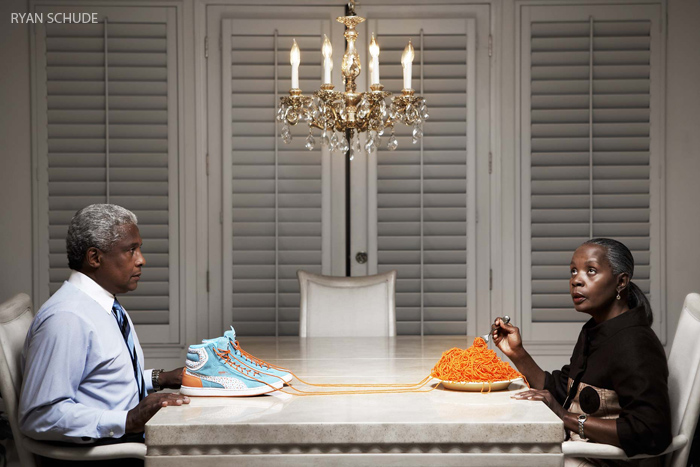
It’s always a good day when you’re photographers email you new work. Even though those days are becoming more frequent than not, I still get really excited! Here are some new selects from Ryan Schude which will be on display at Noni Boutique on Larchmont in Los Angeles. Until then, enjoy!

Ryan Schude

Ryan Schude

Essay: Slow Photography in an Instantaneous Age

Digital photography, we’ve come a long way in a short amount of time.  Where will it take our profession? How will it affect how we approach photography. Well, this post isn’t about digital photography. It’s about shooting beautiful black and white film. Check out New York Times photographer Fred Conrad’s latest post to “LENS”

Fast is fine, but slow can be much better.

Fred R. Conrad

Lens / New York Times / Blog

Digital photography and the ascent of the Web have quickened our jobs. Instead of one deadline a day, we now have continual deadlines, bringing exponentially increasing speed to what we do at The Times.

Picture 2

One advantage of using larger formats is that the process is slower. It takes time to set up the camera. It takes time to visualize what you want.

When doing portraits, it enables the photographer to talk and listen to subjects, to observe their behavior. A camera can trap a photographer sometimes. You can look so intently through a viewfinder that you are unaware of the picture in front of you. When I use an 8-by-10 camera for portraits, I will compose the picture and step back. Using a long cable release, I will look at the subject and wait for the moment. It’s very liberating.

Picture 3

The same technique worked for me when I photographed architecture for the “Geometries” series. But there was another liberating aspect, too. With exposures that may take as long as an hour, you really don’t know what the end result will be. There is a little bit of faith involved, and a lot of imagination. That, and the fact that you have to wait to develop the film, just adds to the excitement.

Picture 4

When the Lens project started, I hadn’t shot large format black-and-white film for quite a while. In fact, there is no dark room in the new Times headquarters. Lucky for me, Chuck Kelton and his Kelton Labs are still around. Then I needed to settle on a film and developer. I ended up with Fuji Neopan and Efke 25, made in Croatia. For a developer, I chose Rodinal. It’s been around since the 1890s. It was made by Agfa, which no longer exists, but I found a store in Hollywood, Freestyle Photographic Supplies, that carried both the film and developer.

Picture 5

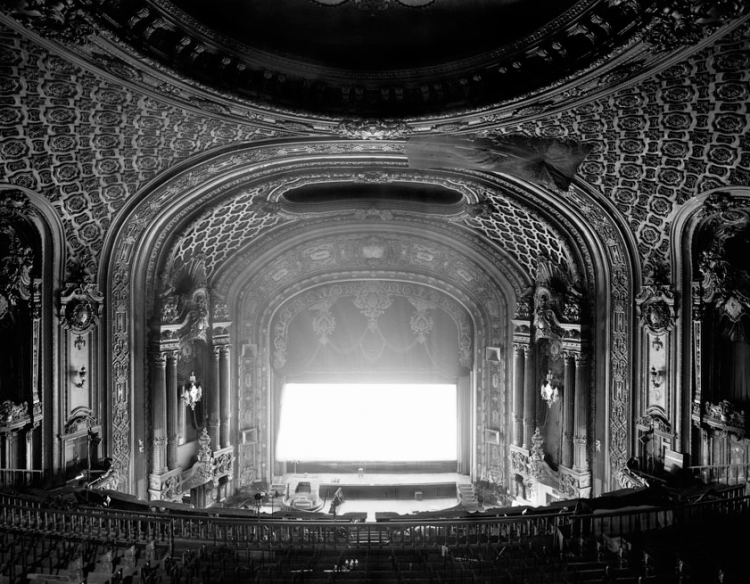
One memorable experience during this project was photographing the one remaining Loew’s Wonder Theater that still shows movies. Loew’s built five Wonder Theaters in the New York metropolitan area in the late 1920s. Two of these movie palaces are now churches. One no longer has its Wonder organ or a movie screen; instead, it hosts music events and boxing matches. One has remained vacant and decaying since 1984. And then there is the Jersey Loew’s in Journal Square. The theater is being restored. It has an original Wonder organ that plays. They even show movies.

Picture 6

I shot the theater from the balcony, while the movie “Blade Runner” was playing. I had no idea how long to leave the shutter open. Since the movie was two hours long, I decided to make two exposures — an hour each. It was during those two exposures that I realized how different and special it was to be shooting on film. When you shoot digital, the images are quick and you spend more time looking at the back of your camera than you do seeing.

Picture 7

I hope that film and large-format cameras stick around for a while. I love the results and I cherish the process. More importantly, when I have the time and opportunity to shoot big film, I feel a connection with photographers who came before me. That may be the most important reason.

Picture 8

Forgotten by Capitalism

Check out the latest issue of Design Mind. It features the photos of  photographer Rob Hornstra and a fascinating article on the Russian elite.

Picture 2In the book 101 Billionaires, Norwegian photographer Rob Hornstra reveals the raw reality lurking behind the facade of the Russian power elite.

Picture 3

Photography by Rob Hornstra, from his 101 Billionaires book. Courtesy of the artist. © Rob Hornstra / www.borotov.nl

Picture 10

From 2000 to 2008, after more than a decade of recession and confusion following the collapse of the Soviet government, Russian capitalism skyrocketed thanks in large part to the country’s vast supplies of oil and natural gas. This boom led the Moscow-based business newspaper Finans to publish an overview of the country’s most powerful citizens, and the paper’s editors declared that Russia was home to 101 billionaires.

Picture 4

But for each one of them, there are millions of others who weren’t connected, lucky, or tough enough to cash in. These citizens — factory workers, cab drivers, veterans, and more — are the subjects of photographer Rob Hornstra’s ironically titled book, 101 Billionaires. They include people like Andrey (pictured at right), a severely drug-addicted young man with HIV and tuberculosis. He receives no assistance from state health organizations and is resigned to his fate (and perhaps liberated by it). “I am sure I will die soon,” he says. “But I am not afraid. Nothing will scare me anymore.”

Picture 8

In early 2009, the day the first edition of 101 Billionaires sold out, Finans announced that the number of billionaires in Russia had dropped to 49.

To learn more about Rob Hornstra and his work visit www.borotov.nl.

Rob Hornstra lives and works in The Netherlands.

Put your ego to rest and make great images

Why do photographers shy away from collaborating with other photographers? I understand the need for complete control and, from a rep’s standpoint, I do like to see a portfolio that is representative of a clear personal vision. That being said, when you’re presented with the opportunity to collaborate with people whose work you admire, why not go for it? Photographers are so often in their own head. The downfall of paving your way in this industry is that most the time you’ll find yourself being very selfish. In many ways, you have no choice and must be completely self-serving when you are just starting out as you work to push your career forward. Then, suddenly, you begin working with art directors and photo editors…and the projects are about the client and no longer one hundred percent about you.

Recently, one of our photographers, Ryan Schude, collaborated with two other photographers, Dan Busta and Tamar Levine. I’m a huge fan of all three. This got me thinking about how rare it is that three photographers with such clear personal styles could successfully collaborate on a project. The resulting image, which we are affectionately calling “Limbo,” portrays twins that aren’t quite twins and a waiting room which seems to be some sort of unhappy intersection between the River Styx and the DMV.

This image blows me away. How did they all find a way to get their personal styles incorporated? And how, with such a large production and so many design elements, did they not kill each other in the process? I decided that this was too special not to share and asked Ryan, Dan, and Tamar if they’d kindly answer some questions about the project. See their answers below, as well as samples from their personal portfolios. Don’t forget to check out each of their personal sites also. I hope this not only shows photographers that collaborating with your peers can lead to glorious results that not only strengthen your network of photographers, but also has the ability to fuel your own work.

Enjoy!

– Jacqueline Bovaird, Glasshouse Assignment

Image too small? See a larger version here.

limbo1024
JB: What is it about collaborations that works for you?

RS: Many people seem confused about the propriety of the creative process and why you would want to collaborate in the first place. It seems, historically, that photography isn’t used to the idea of a collaboration, which seems odd considering how many other mediums utilize such an amazing process. It is happening more as of late with so many team photographers out there working both commercially and with their personal work.

Only a very small percentage of my work is collaborative. Particularly with my personal work, I usually like to have complete control without having to compromise anything. However, collaborations are appealing to me in that they allow for a way of working which helps you to think outside of your own head, and it always produces positive results.

TL: I one hundred percent agree with Ryan. By nature I like to be in control of my personal photography, but you have to throw that out the door when collaborating. Different people bring different things to the table. From a logistical point of view, the sheer cost and time would have multiplied if we tried to do this project solo. Not to mention the fact that I am a fan of both Ryan and Dan’s work, and bouncing off each other manifests so many ideas I wouldn’t have had on my own. You have to go into a collaboration knowing that you will have to compromise a bit, and that’s OK. You never know what will come about. Limbo turned out great, so even though I love shooting alone, I will always make time for collaborations with people whose work I admire.

DB: To be honest I think we all have to collaborate in this business because the photographer is rarely the sole creator. In my experience I’m always working with other artists to achieve something greater than I could do on my own. I suppose working with other photographers is a little different from working with say an art director. But if you leave your ego out of it and really just concentrate on making a great piece than its a very great thing. The team mentality brings new ideas to the table and its my belief that everyone should have an equal influence on the final piece, be it makeup, styling, model, client.. or another photographer. In the early stages I’m trying to visualize what the team is thinking so I can be more on in their mind, I often ask hard questions to visualize what we are talking about so that everyone is on the same page. Other times when we are collaborating I’m thinking about the things that haven’t been thought of like.. the character development, or last minuet light changes.. and bring in that in, I question the teams thinking and wonder how that thing (lighting, prop, character, color) makes sense in the image and if it contributes to the story.

JB: How did this collaboration all come about? Who came up with the idea and how did you figure out a way to incorporate every person’s input?

TL: I wanted to do a collaboration with Ryan and Dan for the Multitude assignment on our photo blog. I have always enjoyed their collaborations and thought it would be a fun thing to do. Everyone had different things to bring to the table so it worked out well.

RS: Tamar started the dialogue with a concept based around a large group shot comprised of different pairs of people who were wearing matching outfits like twins, without necessarily being twins. Everyone’s input was incorporated throughout a few meetings where we sat down and discussed a rough narrative around the concept. We all wanted to utilize each other’s thoughts so it naturally allowed each of our ideas to have a place in the final image.

DB: I would say that we all let the idea evolve on its own. No one really took off with the flag. The picture mostly built itself as we drew the boundaries. We had ideas of using different sound stages, warehouses, rebuilding our own loft, and we came very close to using the union station in Downtown LA. This Art Deco train station location drove most of the final thoughts like the idea of limbo, “being in transit” and most of the fashion, and characters. Once we were are on the same track with the location, we would then add ideas for the image like character ideas, fashion, props, lighting, color. All in all we had many meetings about what the characters are, who they are and what they are doing in the shot
However, at the last minute before the shoot we found out we were out of luck with the train station, so Ryan and I stayed up all night building the set in our studio and planning the lighting.

JB: How did the pieces for this shoot come together?

DB: Logistically we split the work on casting. We used a site called http://www.lacasting.com and we all were responsible for casting two groups of pairs. We had four or five meetings to discuss the project and also worked with a stylist that talked to our models about the fashion that they already own.

RS: Me and Dan built the set in our studio and Tamar gathered all the props together. We even split up the postproduction between compositing, color, and final treatment so it really was a group effort from start to finish.

JB: Is there another collaboration in the works?

DB: Well Ryan, Collins, and I are always collaborating, but nothing is set in stone right now. This was our first collaboration with Tamar, it went really smooth, so I’m sure we will work together again. There is a fight scene that we have been talking about. The shoots are remarkably cost effective the way we shoot, so there will certainly be more in the future.

TL: We worked well together and got good results so I imagine it will happen again. Currently I know Dan and Ryan have been talking about a project they have with Collins, and I have a collaboration (series) I have been working on with Rob Sheridan, who co-created Broken Robot Girl #1 with me.

Thank you so much Dan, Tamar, and Ryan!!
RYANSCHUDE2

Ryan Schude: Agency and Personal

for portfolio requests or questions about Ryan’s work, contact his rep, Jacqueline Bovaird @  jacqueline@glasshouseassignment.com or 212.462.4538.

dan busta

Dan Busta

tamar levineTamar Levine


If you value art so much…

…then pay artists! Google recently offered dozens of artists the chance to design skins for their new browser. However, when they asked how much they’d be paid, Google responded that their payment would be no more than really glorious exposure. I do understand there are thousands of struggling designers out there who would love the exposure and the prestige of designing something for Google. That being said, when a large company who can afford to pay them takes advantage of that, it completely also undermines the value of their work and the work of others.

Read more from the New York Times article here, including words from those designers who have refused the deal.

Sebastiao Salgado, “Genesis”

“Africa”  latest body of work currently on exhibit at the Peter Fetterman Gallery in Santa Monica, California also includes photographs of Sebastio Salgado’s current project  “Genesis”. “Genesis” should be completed in 2012 and plans are being made to display this ecological photo essay in Central Park, New York City.

Picture 13

Picture 1
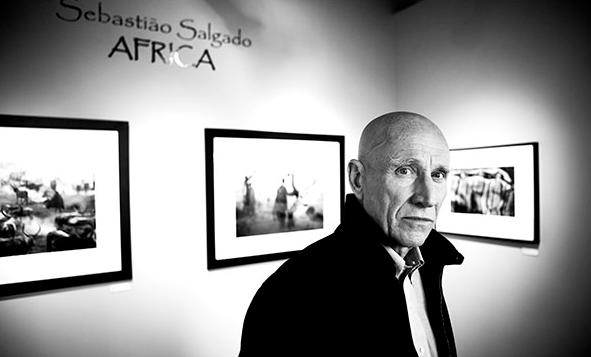
Sebastião Salgado at the Peter Fetterman Gallery in Santa Monica, Calif.

SEBASTIÃO SALGADO sounds as if he’s slightly allergic to Los Angeles. It’s not just that this celebrated Brazilian photojournalist has been sniffling since he arrived in the city, explaining: “I was born in a tropical ecosystem. I’m not used to these plants.” It’s also that he peppers his description of the city with words like strange and crazy, noting that he was mesmerized by the sight of the endless stream of automobile traffic as his plane made its descent.

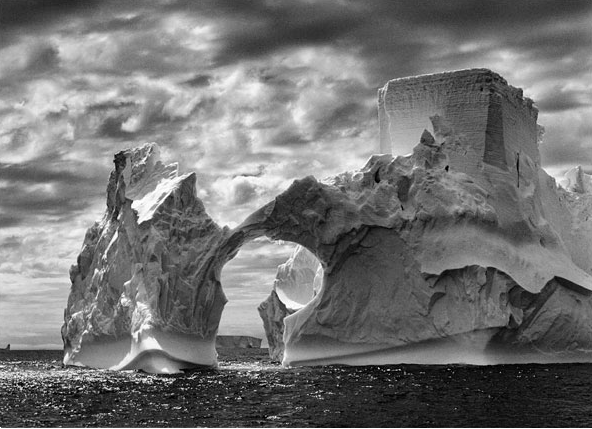
An iceberg in Antartica, photographed in 2005.

The urban sprawl of Los Angeles is, in any case, a far cry from the remote, sparsely populated jungle and desert locations where he has been traveling for his epic, ecological work in progress “Genesis.” Famous for putting a human face on economic and political oppression in developing countries, Mr. Salgado is photographing the most pristine vestiges of nature he can find: pockets of the planet unspoiled by modern development. He has visited the seminomadic Zo’e tribe in the heart of the Brazilian rain forest and weathered desolate stretches of the Sahara. Next up: two months in the Brooks mountain range of Alaska on the trail of caribous and Dall sheep.

The Sand Sea in Namibia, 2005.

But this brand of environmentalism is costly enough to send him back to major cities for support. That’s what brought him here for a three-day whirlwind of talks, meetings and parties. One night he gave a slide show featuring new work from “Genesis” to a sold-out crowd at the Hammer Museum. The next evening he was a guest of honor at a fund-raiser at the Peter Fetterman gallery in Santa Monica, where some of his new work appears in his show “Africa,” through Sept. 30. After that it was off to San Francisco for a benefit dinner given by Marsha Williams before returning to Paris, which he considers home along with Vitória, Brazil.
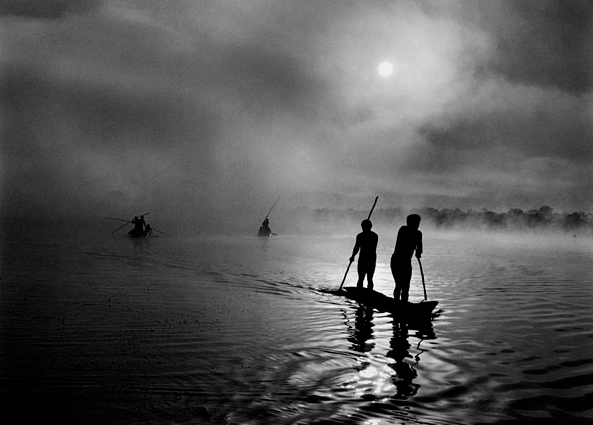
Fishermen in Mato Grosso, Brazil, a 2005

It might sound like a punishing schedule, but the 65-year-old photographer says he doesn’t mind and doesn’t lose focus on work even when flocked by art collectors and celebrity backers. Sitting down at the Peter Fetterman gallery, with his image of zebras in Namibia hanging overhead, Mr. Salgado compared his time away from nature to the potentially disruptive moment when he has to change the film in his camera, when he likes to close his eyes and sing so as not to lose concentration.

“I came here for special things, but my head is there, my body is there,” he said with an intent expression and a gentle Portuguese accent. “I might be sleeping in a hotel room in Los Angeles, but in my mind I am always editing pictures.”

A cattle camp in southern Sudan in 2006.

For “Genesis,” an eight-year project now more than half completed, he is piecing together a visual story about the effects of modern development on the environment. Yet rather than document the effects of, say, pollution or global warming directly, he is photographing natural subjects that he believes have somehow “escaped or recovered from” such changes: landscapes, seascapes, animals and indigenous tribes that represent an earlier, purer — “pristine” is a favorite word — state of nature.

In this way “Genesis” is a grand, romantic back-to-nature project, combining elements of both the literary pastoral and the sublime. Mr. Salgado also describes it as a return to childhood, as he was raised on a farm in the Rio Doce Valley of southeastern Brazil — then about 60 percent rain forest — that suffered from terrible erosion and deforestation. Years later, in 1998, he and his wife, Lélia, founded the Instituto Terra on 1,500 acres of this land to undertake an ambitious reforestation project. His wife, who also designs his books and exhibitions, is the institute’s president; he is vice president and the institute’s most famous spokesman. Or, as Ian Parker wrote in The New Yorker, Mr. Salgado is more than a photojournalist, “much the way Bono is something more than a pop star.”

Herdsmen driving their cattle into a camp in southern Sudan in 2006.

In short, while the Instituto Terra is the locally rooted arm of his environmental activism, “Genesis” is its globally minded, photo-driven counterpart. Since undertaking the series in 2004, he has visited some 20 different sites across 5 continents.

He began with a shoot in the Galápagos Islands that paid homage to Darwin’s studies there. (Mr. Salgado says his title, “Genesis,” is not meant to be religious.) “Darwin spent 37 to 40 days there,” he said. “I got to spend about three months there, which was fabulous.” He was thrilled to see for himself evidence of natural selection in species like the cormorant, a bird that lost its ability to fly after a history of foraging for food underwater, not by air.

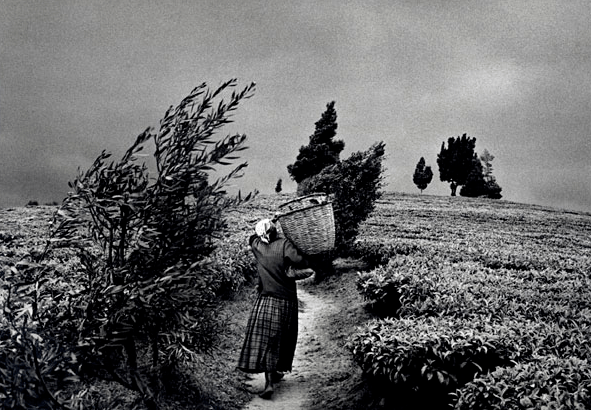
The Gisovo Tea Plantation in Rwanda in 1991.

Last fall he spent two months in Ethiopia, hiking some 500 miles (with 18 pack donkeys and their owners) from Lalibela into Simien National Park to shoot the mountains, indigenous tribes and rare species like a very hairy baboon known as the Gelada. “I was traveling in this area in the same way people did 3,000 to 5,000 years ago,” he said.

Well, almost the same way. He did carry a satellite phone, which made him the point person for receiving news of the United States election in November. “When we found out that Obama won, everyone driving these donkeys, everyone was jumping up and down,” he said. He called Mr. Obama’s election “a victory for the planet.”

He is cautiously optimistic about his own environmental work. “I’m 100 percent sure that alone my photographs would not do anything. But as part of a larger movement, I hope to make a difference,” he said. “It isn’t true that the planet is lost. We must work hard to preserve it.”

Boys fleeing from Southern Sudan to avoid being forced to fight in the civil war, and heading for the refugee camps of Northern Kenya in 1993.

Picture 2

By JORI FINKEL

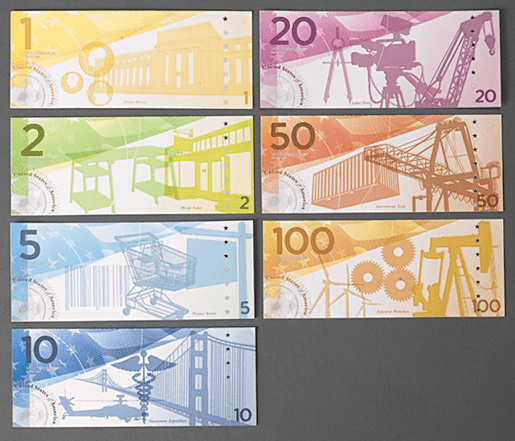
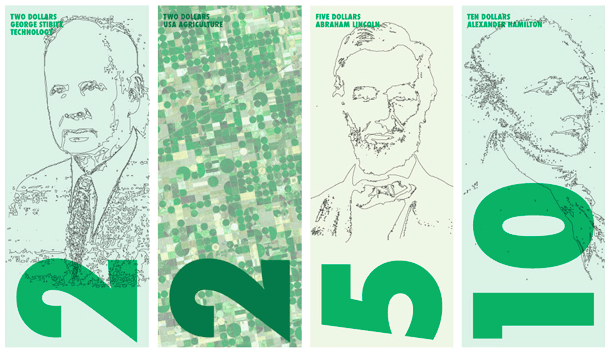
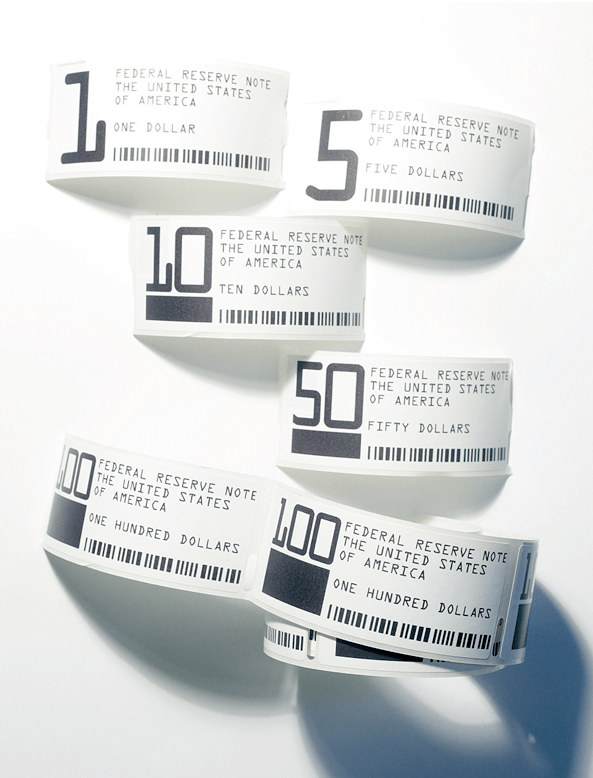
Dollar Rede$ign Project

If advertising agencies ran the world (and admittedly they almost do) they would solve all our economic problems with a total rebranding campaign!

Check out the Dollar Redesign Project, the brain child of Richard Smith, a creative strategy consultant of Think Create Believe. It is one part reflection on the power of advertising, five parts fun and games, with a dash of social entrepreneurship. Check it out and let me know what you think…

"We need to ditch some of the Presidents and go with some ‘modern’ icons such as computer scientists, modern agriculture, etc.” Alex Freund

“It seems so obvious to us that the ‘only’ realistic way for a swift economic recovery is through a thorough, in-depth, rebranding scheme – starting with the redesign of the iconic US Dollar – it’s the ‘only’ pragmatic way to add some realistic stimulation into our lives! Therefore, you must take part and we really want to see what YOU would do.” – Richard Smith

by Gabriel Eid
by Gabriel Eid
by Richard Smith
by Richard Smith
by J. Nordberg
by J. Nordberg
by Michelle Haft
by Michelle Haft

Tiny Art Director

This morning I’m feeling very jealous of all of you from California… It’s raining here in New York, which only makes this gray city even more monochrome. The only solace I can provide for you is an amazing blog I found this morning while drinking my coffee before work. It’s called Tiny Art Director and it is a collaboration between Bill Zeman and his four year old daughter. His daughter commissions drawings and paintings and then critiques them to no end, finally stamping each commission with “approved” or “rejected.” It’s a nice little take on the art director/artist relationship. It’s also adorable to see a little girl going through the inevitable dinosaur phase..Enjoy!

My favorite critique by the Tiny Art Director:

“No I hate the dragon’s head! Because there’s two dragons – see look: this is a dragon and this is a dragon. That one has paws and this one has paws. See look: That is the difference. Now draw it on the back! Get that one away. Erase it daddy – erase it now. Don’t put it on the computer!”  – T.A.D.

Bill Zeman

Photographers looking for reps, read me!

If you’re not reading A Photo Editor regularly, I’d recommend making it part of your routine. Here is an amazing interview with Deborah Schwartz, a great rep on the west coast, who talks about which photographers actually need reps and some of the mistakes photographers make wanting to be represented too early in their career.

Sad but beautiful photo essay

As image-makers, photographing is the way we deal, the way we understand, and the vehicle to survive within our world. Many times it is the only vehicle to move forward from tragic events. I’ve seen a great deal of photo projects surrounding families and the loss of those close to us. I just came across one by Phillip Toledano, which is one strongest I’ve seen in a while. Toledano explores the last few moment he had with his father. The success of the project is in part due to his writing, part to the photographs, and part to the presentation. Check it out here.

http://www.dayswithmyfather.com

http://www.dayswithmyfather.com

Submit Your Test Shots!

Photographers’ test shots are one of my many favorite things… kind of like photo rep candy (they taste almost as sweet as great promos and art buyers who answer their phones). If you know me, you know that I adore all my photographers and love to see them having a great time in front of the camera.

Submit your test shots! I want to see awkward shots of your crew jumping in front of the seamless and your digital tech sleeping on the keyboard, memory cards and good intentions in hand. So don’t take yourself so seriously (you all do enjoy your work right?) and send me some shots of your crew and yourself goofing around! Submit test shots to me, Jacqueline Bovaird, at jacqueline@glasshouseassignment.com with “test shot submission” in the subject. You’ll make me happy and I’ll post the best here on Stone Thrower with tons of links to your site. Don’t forget to include one of the final shots from the shoot!

Here are some of Evan Kafka’s tests from a recent shoot. These are the people behind the scenes on all the gorgeous shots we know and love.

Evan Kafka

Photographer Evan Kafka

First Assistant Josh FreiwaldFirst Assistant Josh Freiwald

Studio Manager Jacek Kuzniar

Studio Manager Jacek Kuzniar

Make Up Artist Nikki WangMake Up Artist Nikki Wang

Thanks for submitting these Evan!

Vendor/Client Virval Video

Here is a hilarious video which is appearing all over the photo-world.

You Tube Video

Let it be known that I realize this is a completely one-sided argument. Photographers should always hold firm on the value of their images and their work. That being said, business is always going to be a give and take… everyone involved needs to feel like they’re getting a good deal. What do you think? Is this accurate?

Ryan Schude in CITY Mag!

Check out our very own Ryan Schude in this month’s CITY Magazine!

I was already an enormous fan of CITY but now with a recent relaunch, CITY is a bigger, sexier version of itself… and who doesn’t like that?

CITY Mag

Enjoy! Congrats Ryan, your images are, as always, amazing.

Check out Ryan’s online portfolio here.

For more information, contact assignment representative Jacqueline Bovaird.

212 . 462 . 4538 | jacqueline@glasshouseassignment.com

Women in Photography

I would like to introduce you to a new web site that I stumble upon, Women in Photography. Although established in 2008 it appears to be well established and worth visiting. Here is an excerpt from their last group show.

Women in Photography launched in June of 2008 as an outlet for women photographers to exhibit work outside of the traditional commercial art world. Showcasing emerging photographers in addition to mid-career and established artists, it is designed as a resource for photographers, editors, curators, gallery owners, and the general public to discover and enjoy the work of women artists. As an internet-based project, the site reaches a global audience. Exhibitions are co-curated by Amy Elkins and Cara Philips.

Picture 16

A GROUP SHOWCASE

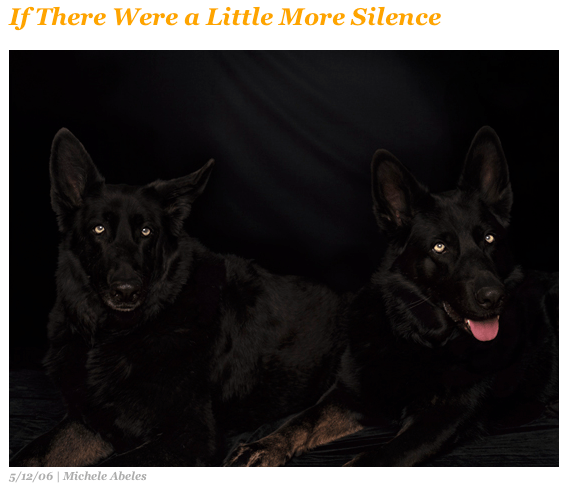
“If there were a little more silence, if we all kept quiet… maybe we could understand something”
-Federico Fellini

The photographer often retreats inward from the external world – to digest, to dissect and to make it their own. The noise of the world must be taken in and internalized before they can turn their gaze out again. In that stillness all the small parts of a riddle begin to be solved. Without that the artist would most certainly be lost.

If There Were a Little More Silence, wipnyc’s first group showcase, explores the artists innate desire to break away and embark on one’s own investigation of environment, family, society and self. Featured artists include Michele Abeles, Rebecca Horne, Melissa Kaseman , Catherine Larré, Stacy Renee Morrison, Sonja Thomsen, Anna Venezia, Jessica Watson and Sarah Wilmer.

Picture 19Jessica Watson was born in 1973 in Massachusetts. She received her BA in studio art from Wellesley College and her MFA in photography from Bard College. Her work has been exhibited in New York galleries, including Art in General, Larissa Goldston Gallery, Massimo Audiello Gallery and Sean Kelly Gallery. She was a resident at the Lower Manhattan Cultural Council’s Workspace Program in 2005. She lives and works in Brooklyn, NY. www.jessicamanningwatson.com
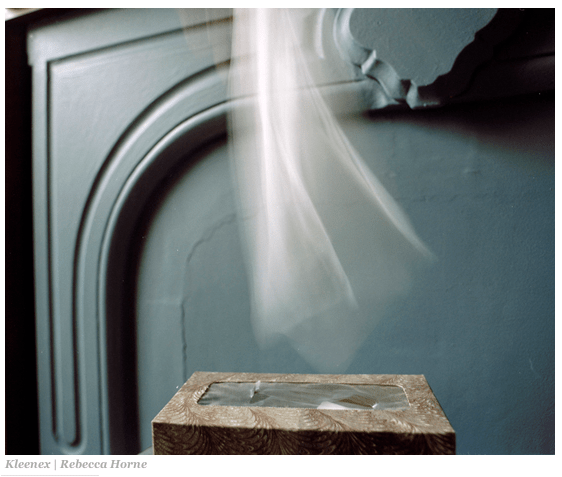
Picture 20Rebecca Horne received a BFA from the San Francisco Art Institute in 1992 in California, and her MFA from Mason Gross School of the Arts at Rutgers University in 1997. After graduating she alternated between teaching photography at Rutgers University and working at photo agencies Redux and Sipa Press and photo editing at Newsweek and other magazines. She is currently the Photo Editor for Discover magazine.

Rebecca Horne has exhibited her photography in Europe and the US and is represented in NYC by Roebling Hall gallery. www.galleryartist.com/rebeccahorne

Picture 23Born and raised in Missouri, Sarah Wilmer lives and works in New York, with her cat, Tubs. www.sarahwilmer.com

Picture 25Michele Abeles has lived and worked in Brooklyn, NY since 1999. She makes work in the city, in her apartment, in other people’s homes, on the road, in the desert, on the beach, in the forest, and will drive many miles to find what she doesn’t know she’s looking for.

Since 2004 she has exhibited in NYC, Los Angeles, Seattle, Indianapolis and abroad. In 2005 she was selected to show work in Art & Commerce’s Festival of Emerging Photographers. She is a recent graduate from the MFA program at Yale University where she was awarded the 2007 Richard Benson Excellence in Photography prize. She teaches at Parsons the New School for Design and currently is preparing to participate in the 2008 High Desert Test Sites. www.micheleabelesphotography.com

Picture 22Catherine Larré was born in Nancy. She studied at ENSAAMA in Paris and then
at the Royal College of Art in London. Her work has been exhibited throughout Europe, most recently at the Centre Photographique, d¹Ile-de-France. She lives and works in Paris. www.catherinelarre.com

Q&A Series: Loyality vs. New Talent?

Q & A SERIES:

With budgets tightening, is now the time to stick to your regular photographers, or are you reaching out to new talent?

Are photo editors and art buyers still keeping tabs on new photographers? With jobs being cut and much of the media industry in panic, do they even have the time to peek at the hundreds of promotions in their mail? Obviously each photo editor or art buyer has a list of photographers which they work with regularly or would like to soon. So how do you get on that list? I’m curious about the flexibility of rosters and whether our current economic condition is affecting their fluidity. Do photo editors hold tight to those people they know to be reliable? Or perhaps now is the time to take a risk and branch out? Does the lowest bidder always get the job?

If you’re competing again their regular contributors, how do you get the job? Keep submitting and keep pushing your own work to evolve. My advice is to always be the photographer who thinks through the job more than the next guy (or gal). Always be the one who is more prepared, creative, and ready to try something new. That being said, don’t be afraid to give a client a great deal if the particular job will mean pushing you onward creatively and professionally… because you’ll be the one working while others are still sending out postcards.

As I do each month, I’ve put this question out to some of my favorite art buyers and photo editors in the industry. With budgets tightening, is now the time to stick to your regular roster of photographers, or reach out to new talent?

As always, thank you to everyone who contributed to this month’s Q&A! The feedback has been wonderful and incredibly encouraging. Let’s keep it up!

– Jacqueline Bovaird, Assignment Rep, Glasshouse Assignment


McKinneyKELLIE BINGMAN, ART BUYING SUPERVISOR, MCKINNEY

Regardless of the economy, we always reach out to the best photographer for the job. Over the years I’ve found that there isn’t a shooter out there who won’t do everything in their power to work within the budgets I have. It’s great to establish and work within a partnership like that and it almost always results in a win-win for all involved.

AndresCortez_Vox

ANDRÉS CORTÉS, ART BUYER, THE VOX COLLECTIVE
Stick to whoever is flexible in terms of budgets…. Also reaching to photographers overseas. Personally I prefer to work with people I’ve worked with in the past.

CarolineHirsch_NG

CAROLINE HIRSCH, PHOTO EDITOR, NATIONAL GEOGRAPHIC ADVENTURE MAGAZINE

Happily, we are working with our regular outdoor-adventure-friendly photographers (who already are comfortable sleeping by the side of a river or on a mountain, not at the Ritz), and also searching for new talent that are up for the challenge and are based just right where we need them! ………………………………….. ……………………………. ………….. …………………………….. …………………….. ………………. ……………………… Wall Street Journal, Weekend

ERICA BECKMAN, PHOTO EDITOR AND PHOTOGRAPHER, WALL STREET JOURNAL, WEEKEND JOURNAL

There are so many interesting young photographers out there that I’m always trying new talent. In terms of photographers who I use on a regular basis, it seems that most people are pretty flexible and are adapting the economy; they may not be happy about being paid less, but they are definitely happy to be working. If I think a story is right for a certain photographer I’ll give them a call first to see if they want to shoot, but if the budget we offer doesn’t work for them, well, then I move along… The fact that the restricted economic climate might be giving more opportunities for young blood is really encouraging for our industry; although there have been cut backs it’s allowing new talent to grow.

Picture 9

KRISTI DRAGO-PRICE, PHOTO EDITOR, BRIDES MAGAZINE

I think it is a mix of both. On one hand using photographers you have a steady relationship with is helpful because they understand the magazine and what you need. There is less of a chance for a reshoot and you can rein them in on expenses. On the other hand, new talent is always exciting to find and they maybe more willing to come in under budget to create a steady relationship.

SEE ASSIGNMENT EMAIL BLAST HERE.

Keep a look out for next month’s question and email blast!!

If you have any ideas, comments, or if you’d like to participate in our monthly email Q&A, please don’t hesitate to contact me, Jacqueline Bovaird. I am always looking for new voices to add to this evolving discussion.

212 . 462 . 4538 | jacqueline@glasshouseassignment.com

Kafka in Money Magazine

Evan Kafka. Always reliable. Always awesome. Always reliably awesome.

Check out Evan Kafka’s portraits of Robert Frank in the new issue of Money Magazine.

Evan Kafka in Money Magazine

Evan Kafka in Money Magazine

Evan Kafka in Money Magazine

Great job Evan!

Contact assignment rep Jacqueline Bovaird with questions or portfolio requests.

212 – 462 – 4538  |  jacqueline@glasshouseassignment.com

http://www.glasshouseassignment.com

Lens: New York Times Blog

I’m not sure what to make of the new New York Times blog Lens. It’s definitely a move in the right direction, that is, a more visually exciting, intuitive, and user friendly direction.

Lens

Let me make sure to say one thing: Bravo to the New York Times for trying new things. However, they’re also the leader in many respects and, therefore, are apt to receive more criticism.

Lens
Emilio Morenatti/Associated Press

Things I am enjoying about Lens definitely include the new and sexy page-turning interface. A blog being horizontal? While this shouldn’t be new and different and somewhat exciting, it is. I am also enjoying the slide show and full screen options, which only make ignoring your other tasks at hand easier. Above all, kudos to the Times for letting the photos shine on. While they qualify Lens as a blog for “Photography, Video and Visual Journalism,” the photos here dramatically outweigh the text, something I didn’t expect. That being said, I find myself wishing that it was easier to read the extended text with each post. In a perfect world (of my own making) the extended story text would seamlessly appear below the image, pushing the rest of the frames down with some sort of show/hide functionality. So I suppose I’m applauding their ratio of images to text, but wish the text was more readily available when I want it to be. Can’t we have it all?

Lens
David Burnett/Contact Press Images

Lens: Photography, Video and Visual Journalism

I’d love to hear what you think!

Leave me a message here or email info@glasshouseassignment.com

A look at the World

The New york Times ran a wonderful piece on must see places. Beautifully photographed by Raymond Meier.

I think my favorite place might be Louis Kahn’s Capital Complex, Dhaka, Bangladesh.

Check out a few of my top choices.

Picture 15

Culture vultures always have at least one must-see-before-I-die destination on their list: Michelangelo’s Sistine Chapel; Chandigarh, the Le Corbusier planned city in India; Robert Smithson’s ‘‘Spiral Jetty’’ in Utah. These are places that can change the way we see and the way we think, places worth getting on a plane for, particularly now, when travelers are seeking out edifying experiences more than ever. With this in mind, T asked an eclectic group of experts to share their personal meccas. Some choices were iconic, like Walter De Maria’s earthwork ‘‘Lightning Field,’’ in Quemado, N.M., while others, like the ceiba tree in the Little Havana section of Miami on which the artist Ana Mendieta carved her silhouette, are hardly on the Grand Tour. ‘‘Seeing art is always about a personal pilgrimage,’’ says Amy Cappellazzo of Christie’s, who chose Mendieta’s piece. (Brancusi’s ‘‘Endless Column’’ in Targu-Jiu, Romania, was a runner-up.) ‘‘It is a commitment to open-mindedness and belief in the state of wonder.

Picture 9

’’LOUIS KAHN’S CAPITAL COMPLEX
DHAKA, BANGLADESH

‘‘Kahn’s skill at ennobling experience through simple materials grandly used can be sensed at his library in New Hampshire and the ruins of his Trenton Bath House. But it is in the marshy capital of Bangladesh that one of America’s greatest architectural talents can be experienced in all its force.’’
— Barry Bergdoll, chief curator of architecture and design, MoMA

Picture 10STIFTUNG INSEL HOMBROICH
NEAR DÜSSELDORF, GERMANY inselhombroich.de

‘‘It’s a sort of utopian project meets private collection. The extensive grounds are practically left to the wild in a sort of eco-conscious way. In contrast to that, pavilions, like little follies, have been commissioned by artists and architects alike. They house an amazing mixture of works, from ultra-contemporary to modern to traditional. The whole thing is strangely lowbrow, no-nonsense, like a very contemporary, quiet renaissance.’’ — Sarina Basta, curator and writer

Picture 14

KANAZAWA

This town, on the west coast of Japan’s main island, has recently emerged as a place of pilgrimage for both ancient and modern Japanese art and craft. 21st Century Museum of Contemporary Art It’s known for its eclectic rotating exhibits, and the striking building is a destination in itself (kanazawa21.jp). Yasue Gold Leaf Museum Kanazawa produces most of Japan’s gold leaf. See excellent examples at this small, thoughtfully curated collection (011-81-76-233-1502). Kenrokuen Garden The site is named for the six attributes (kenroku) considered vital for a perfect garden: space, seclusion, artifice, antiquity, water and scenic views. Myoryuji One of Japan’s most intriguing temples, it abounds with secret passages, hidden rooms and traps designed to protect feudal lords. (011-81-76-241-0888.) AKIKO ROBINSON

GLASS MENAGERIE PATRICK BLANC’S ‘‘GREEN BRIDGE’’ IN THE COURTYARD OF THE 21ST CENTURY MUSEUM OF CONTEMPORARY ART IN KANAZAWA, JAPAN.

Picture 13JAMES TURRELL SITES

Four places to experience the artist’s meditations on light and space. Louise Blouin Foundation, London After dark, the 78 windows here emit a transcendental light show (ltbfoundation.org). Pomona College, Claremont, Calif. His alma mater houses an example of his ‘‘skyspace’’ works (pomona.edu/museum). Villa Panza, Varese, Italy Turrell’s piece communes with installations by Dan Flavin and Robert Irwin (fondoambiente.it). James Turrell Museum, Estancia y Bodega Colomé, Argentina The first museum dedicated specifically to the artist (left) is at the Hess Family Winery (estanciacolome.com).

Dell keeps it sweet and fluffy

Something interesting is happening over the new Dell branding. They have targeted it towards women, which is perfectly acceptable. What is causing an uproar is the way they’ve gone about it. I just read a clever and funny review of the situation on The Dog and Pony Show here. Since I think that they did a great job writing about the situation, I won’t try and replicate it. My favorite quotes are below but I’d of course recommends reading it in full and also checking out Dell’s site here and coming to your own conclusions.

Dell

“First they call it Della. Aww… how cute and clever and retch-inducing. Then they only play up laptops with pretty graphics or stylish sleeves – because you know, there’s no way any woman would ever really care about the specs. Their first bullet point about most of the notebooks is how it’ll nicely fit in your bag. Jesus, why don’t they talk about how the keyboard won’t break your nails and how you can surf the net while ironing your husbands shirts or getting dinner on the table before he comes home.”

“They even have a tip that says “Use your netbook to plan your ovulation cycle and crank out more kids to fulfill your sole purpose as a woman.” Ok, I made that up, but I wouldn’t have been surprised to see it on such a ridiculous, stereotypical, insulting piece of marketing.”

What do you think?

Update: Stephen Mallon on Wired

Stephen Mallon

My last post was singing the praises of a photographer named Stephen Mallon (see below). Well looks like I’m one of many fans! Check him out in WIRED here.

Stephen Mallon, Salvage of Flight 1549

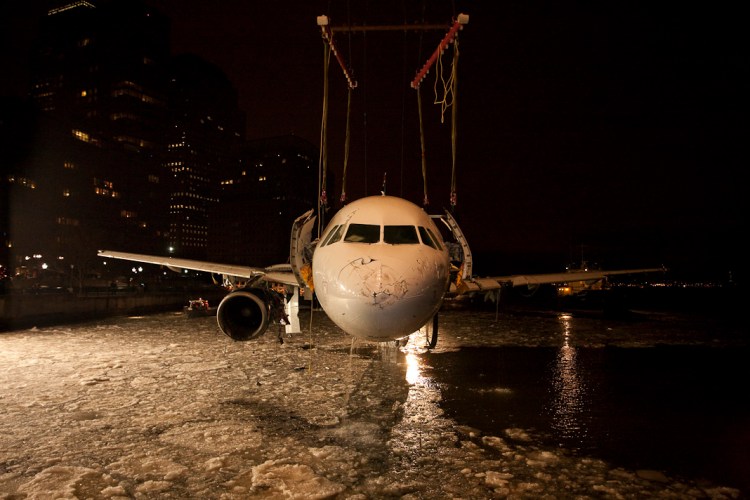
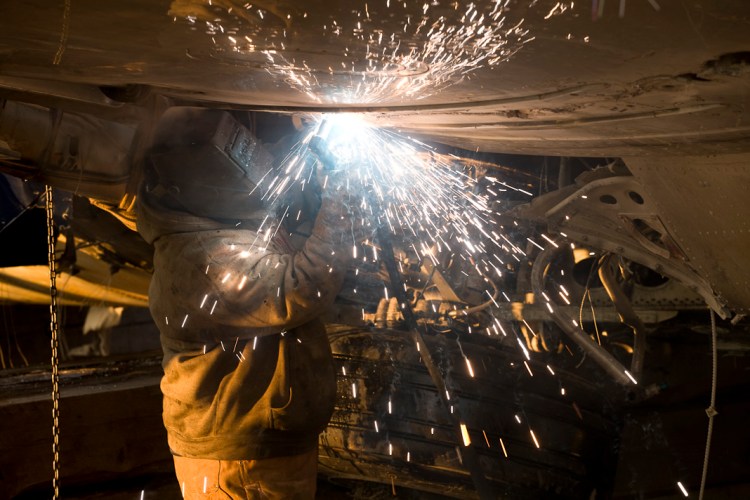
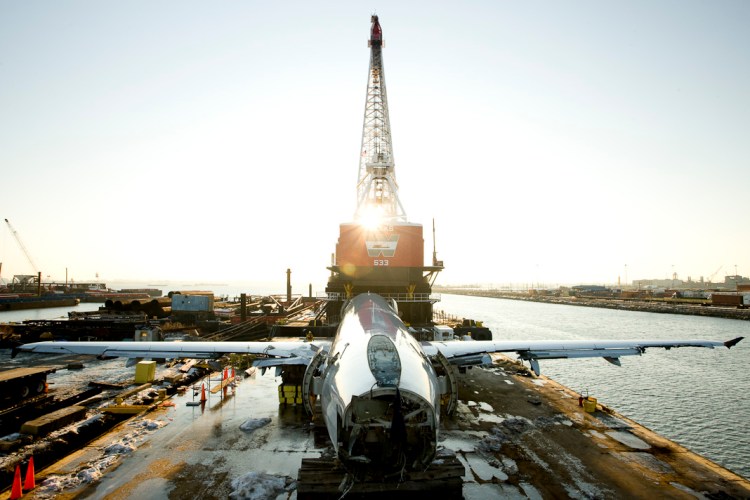
I had the wonderful fortune of meeting Stephen Mallon as party recently. Not only are his images stunning but his enthusiasm for his work was so refreshing and infectious. As a rep, the excitement of photographers who are clearly invested and passionate about their work is simply contagious and, when the images are good, makes me want to shout their praises from assorted city rooftops. Since shouting from rooftops is frowned upon and relatively ineffective, this blog seems to be the modern edition of this expression. Stephen was nice enough to send me a few jpgs and contribute some insight which you’ll see below. These photographers are from the recovery of flight 1549 which landed in the icy Hudson river this past January. See his site here for more.

Stephen Mallon

Q: How did you get access to the site?
A: Weeks Marine is one of my existing clients. I have photographed with them on a personal project about the recycling industry (they are involved with retiring 1500 subway cars from New York City) and they then hired me to document the delivery of the concorde to the intrepid museum in New York. When flight 1549 landed in the water, we were at a happy hour a couple of hours later and someone said, “I wonder who is going to get the plane out of the water?” The little voice in my head said “I know who!”

picture-2

Weeks marine has the largest floating crane on the east coast (it can lift one million pounds, no joke), so i was pretty sure it was going to be their job. I called my client asked him if he got the job, and he told me he was finding out in the morning but was meeting with the FBI and the coast guard… could I please call Tom Weeks to confirm? I got him on the phone the next morning and he asked me if I wanted to come down to work. I said absolutely, grabbed my tripod and camera, and headed to Jersey. We left on the tugboat pulling the crane and arrived in the early afternoon.
Stephen Mallon

Q: How long was the recovery process of the plane?
A: The plane got out of the water Sunday, January 18th at 12:30 am, so about 36 hours after Weeks Marine arrived on the scene. It took about 2 weeks until they moved it to the warehouse that it’s currently stored in.

Stephen Mallon

Q: Was the salvage an emotional process for you or for the workers involved?
A: Surreal mostly. The crew were used to this for the most part, although every once in a while we did look down and say, “Wow there’s a plane underwater right there…yea I know!”

Stephen Mallon

Thanks Stephen!

Check out more of Stephen Mallon’s work here!