Many photographers have been intrigued by the baffling distortions—both subtle and disquieting—that can result when the camera “captures” the real world. First Doubt: Optical Confusion in Modern Photography explores this fascinating yet seldom discussed undercurrent in the medium’s history. The exhibition features approximately one hundred photographs taken by a diverse array of twentieth-century photographers, including Imogen Cunningham, Lee Friedlander, and Florence Henri and Brassaï, drawn from the collection of Allan Chasanoff, b.a. 1961, as well as from the Gallery’s permanent collection. First Doubt challenges the common notion that a photograph is an easily understood representation of what stands before a camera’s lens. By employing unexpected juxtapositions, novel vantage points, and unusual patterns of light, shadow, and texture, the photographs on view destabilize the viewer’s eye, causing it to question what it is seeing.
Imogen Cunningham, Roi, 1927
During the medium’s infancy, many early photographers, expecting their cameras to offer clear and coherent views of the world, were often frustrated by how their images seemed to render the world unfamiliar and ambiguous. In the modern era, a range of image makers began to embrace these ambiguities as unique and valued attributes of camera vision. From the playful experiments of Bauhaus artists to the disquieting images of those working out of a Surrealist tradition, many of the photographs in First Doubt were made expressly to disorient or startle the viewer. In other photographs in the exhibition, the artists seem to have stumbled across scenes of confusion quite accidentally.
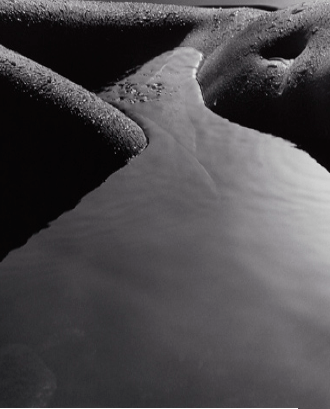
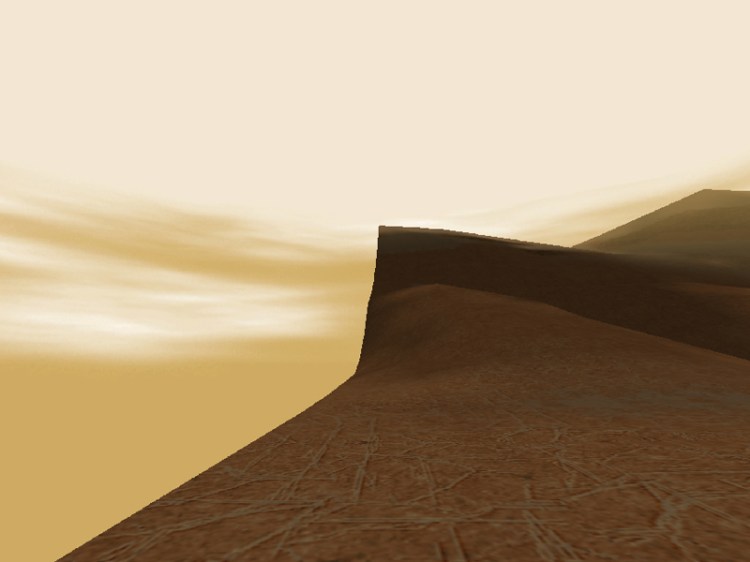
The exhibition, however, is not one focused on how photographs are made but rather on how they are perceived. As Joshua Chuang, Assistant Curator of Photographs and the organizer of this exhibition, explains, “Neither the strategies, intentions, and serendipity of the photographers nor how their pictures function to confuse remain as critical as the fact that they do confuse—if only for a moment.” In Karin Rosenthal’s Belly Landscape (1980), for example, dramatic shadows and the reflection of sunlight on water seem to form a picturesque desert landscape.
Karin Rosenthal, Belly Landscape
A closer investigation of the photograph reveals the dunes to be a human body, upending the initial illusion of the picture. Chuang adds, “The pictures themselves contain a paradox: they confuse because they hold still these particular incidents of confusion, yet it is this stillness that allows viewers the opportunity to resolve the optical problem.” Rosenthal’s image, along with the other photographs in the exhibition, urges the viewer to confront and decipher the confusions within the frame. In the current digital era, ubiquitous image-editing software has made it easy to manipulate photographs so that they appear too good—or strange—to be true. Well before “Photoshop” became a verb in our visual vocabulary, however, photographs such as those included in First Doubt resisted the notion that the world could be satisfactorily seen and known through the lens. Collectively, these pictures remind us that the camera is at best an imperfect surrogate for human vision.
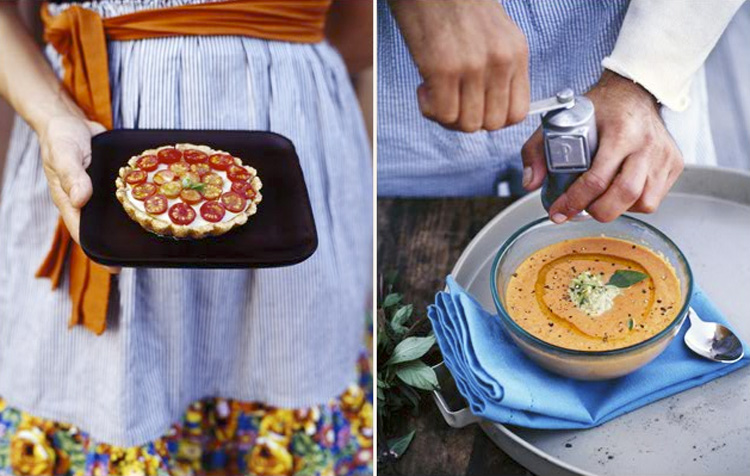
Market research firm Mintel says next year will be that of comfort foods, cocktails and “fresh” labeling.
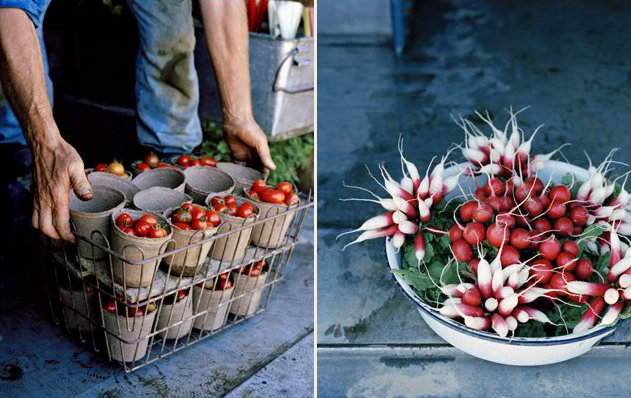
Miha Matei / Glasshouse Assignment
Consumers, who have been cutting back on eating out, are attracted to home-like cooking methods of slow-baking and grilling—as opposed to braising and poaching. Classic cocktails are also coming back for similar reasons.
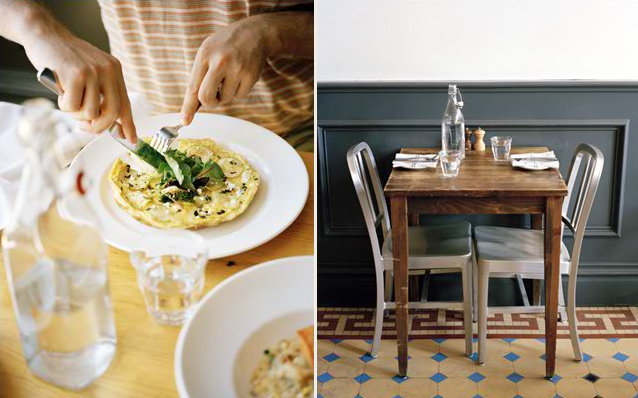
Miha Matei / Glasshouse Assignment
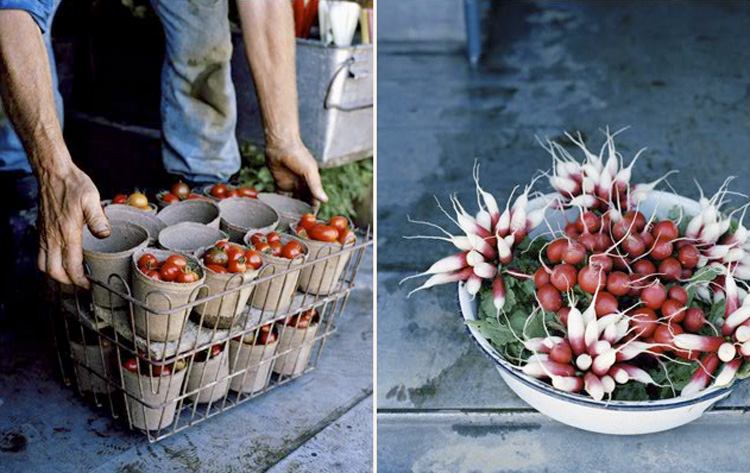
Mintel also notes that “fresh” labeling has gone up by 22% in two years. Despite the tough economy, consumers are still willing to pay more for organic and fresh foods.
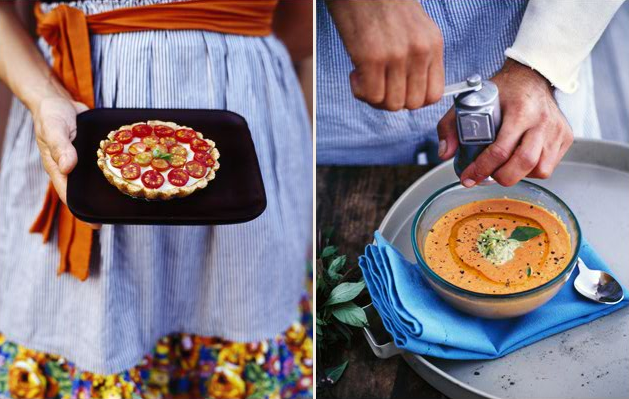
Miha Matei / Glasshouse Assignment
This will also bring an upsurge in desire for locally grown meats and produce, not just at the supermarket level but also among restaurants, who will boast the origins of their foods as a way to attract customers weary of genetically engineered products that take forever to get to market.
John P. Charlton of Philadelphia patented the postcard in 1861, selling the rights to H. L. Lipman, whose postcards, complete with a decorated border, were labeled “Lipman’s postal card.” Nine years later European countries were also producing postcards.
Postal Card UK 1890
The United States Postal Service began issuing pre-stamped postal cards in 1873. The postal cards came about because the public was looking for an easier way to send quick notes. The USPS was the only establishment allowed to print postcards, and it held its monopoly until May 19, 1898, when Congress passed the Private Mailing Card Act which allowed private publishers and printers to produce postcards.
Vik Muniz (Brazilian, b. 1961) is the ninth artist to participate in Artist’s Choice, a series of exhibitions in which an artist serves as curator, selecting works from MoMA’s vast collection to create an exhibition. In his work, Muniz inventively questions the function and traditions of visual representation by using unlikely materials to render the subjects in his photographs. For this exhibition, Muniz has chosen a rebus—a combination of unrelated visual and linguistic elements to create a larger deductive meaning—as the organizing principle of his presentation. The exhibition will feature approximately 80 works of sculpture, photography, painting, prints, drawings, video, and design objects selected and installed by the artist in a narrative sequence to create surprising juxtapositions and new meanings. Among the artists whose work will be on view are John Baldessari, Gordon Matta-Clark, Nan Goldin, Marcel Duchamp, Pablo Picasso, Eugène Atget, and Rachel Whiteread. Design objects will range from a wooden pencil to a kitchen pail to a Rubik’s Cube to finally, an Exit sign.
There has long been opposition to teaching children to believe in Santa Claus. Some Christians say the Santa tradition detracts from the religious origins and purpose of Christmas. Other critics feel that Santa Claus is an elaborate lie, and that it is unethical for parents to teach their children to believe in his existence.[6] Still others oppose Santa Claus as a symbol of the commercialization of the Christmas holiday, or as an intrusion upon their own national traditions.[7]
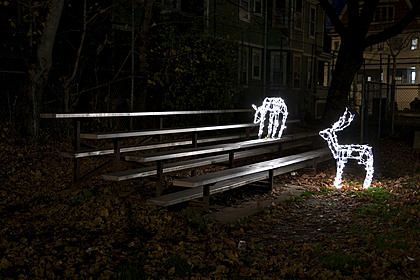
There is an ox shaped like a stag. In the middle of its forehead a single horn grows between its ears, taller and straighter than the animal horns with which we are familiar. At the top this horn spreads out like the palm of a hand or the branches of a tree. The females are of the same form as the males, and their horns are the same shape and size.
During World War I in 1914 and 1915 an unofficial Christmas truce took place. The truce began on Christmas Eve, December 24, 1914, when German troops began decorating the area around their trenches in the region of Ypres, Belgium, for Christmas. They began by placing candles on trees, then continued the celebration by singing Christmas carols, most notably Stille Nacht (Silent Night). The British troops in the trenches across from them responded by singing English carols. The two sides shouted Christmas greetings to each other. Soon thereafter, there were calls for visits across the “No man’s land” where small gifts were exchanged. The truce also allowed a breathing spell where recently-fallen soldiers could be brought back behind their lines by burial parties. Funerals took place as soldiers from both sides mourned the dead together and paid their respects. At one funeral in No Man’s Land, soldiers from both sides gathered and read a passage from Psalm 23
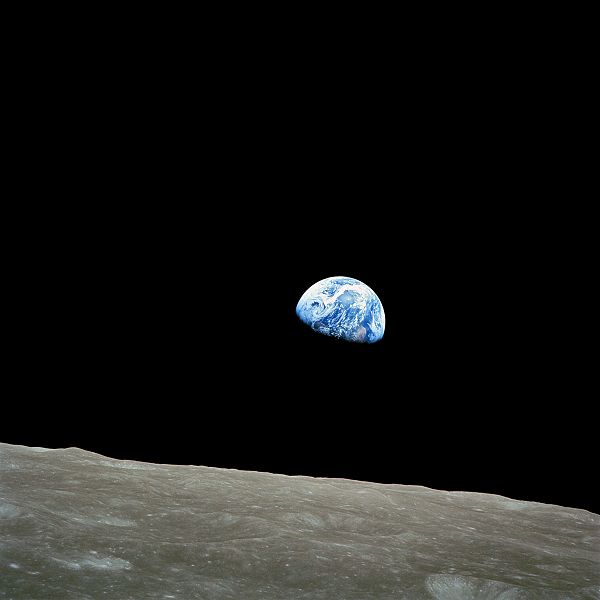
In 1969, the US Postal Service issued a stamp (Scott # 1371) commemorating the Apollo 8 flight around the moon. The stamp featured a detail of the famous photograph of the Earthrise over the moon (NASA image AS8-14-2383HR) taken by Anders on Christmas Eve, and the words, “In the beginning God…”
Credits Corporate Name of Client: Forest Stewardship Council (FSC) Agency: Jung von Matt, Stuttgart Creative Directors: Joachim Silber/Michael Ohanian/Tim Knowles Copywriter: Lennart Frank Illustrators: Drawn by Larch, Pine and Oak Graphic Designer: Thomas Lupo
Basic description of the project:
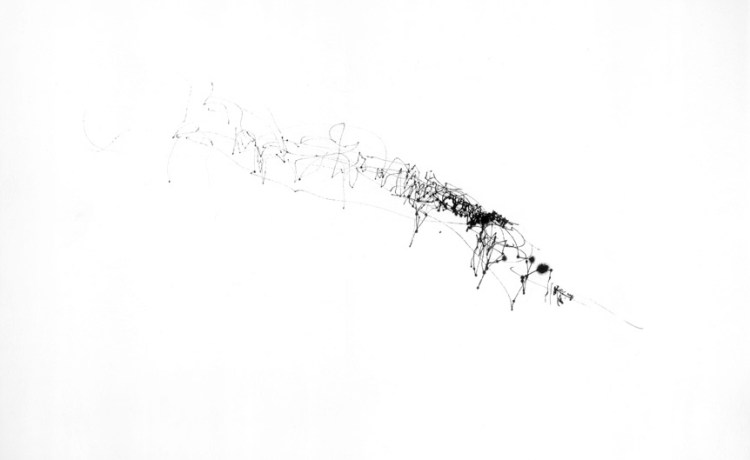
The brief: To develop an attention-getting promotion that attracts new supporters to FSC. Our strategy: Trees are essential to life. They improve the CO2 balance, offer habitat to animals and they are the beauty of nature. We felt that it was worth reminding people of that. Not by using nicely-shot images of forests, but in a different way – one with a little more depth. What we did was to add pencils to the tree’s branches. When they moved in the wind, unique works of art were created. These fascinating pictures were displayed and sent to potential supporters.
How it was done
Okay, maybe this isn’t photography. A colleague of mine brought this project to my attention and I couldn’t resist. SWJ
I’m worried about emerging photographers. Making the choice to be a photographer, while of course artistically fulfilling and creative and on and on and on, has always been financially terrifying. AND while I do hate it that every sentence at holiday industry parties seems to start “with the economy the way it is… [insert depressing reality here]” I must say that i don’t see life getting easier for photographers. It makes me sad to think it might just get worse from here. I’m worried that young artists will be less likely to go into art related college programs and that we’ll all miss out on a valuable point of view. For those who do jump into the photography world, it seems more likely that they pursue commercial work rather than take risks exploring fine art. Will commercial photography become even more flooded and will there be a gap in the development of “fine art” photography? How relevant will one’s passion for photography be? All I can say to those questioning their careers is that I get it, but please make work! The rest of us can’t survive without it.
Since we can’t escape our environment’s influence on our work, I’m interested to see the images which have been affected by our present economic instability. So here is my call to arms:
CALL FOR ENTRIES
Do you have work which is in some way reflects our current economic state? This is open-ended so run with it!
While we can’t offer a cash prize, I can offer a portfolio and marketing critique by the head of our assignment division/photo rep as well as tons of exposure here, on our blog. Any relevant work submitted will receive a response from our photo rep, so even if you do not win, you’ll still get feedback! The best of the best will be featured here as the winner.
Deadline: January 30, 3008
Submissions: Please address all submissions to Jacqueline Bovaird, info@glasshouseassignment.com. You may submit 1-15 images, with the longest side of the image being 800 pixels at 72 dpi.
As new posts come up here, you will be able to find this page via the new “Call for Entries” page link on the right.
Good luck!
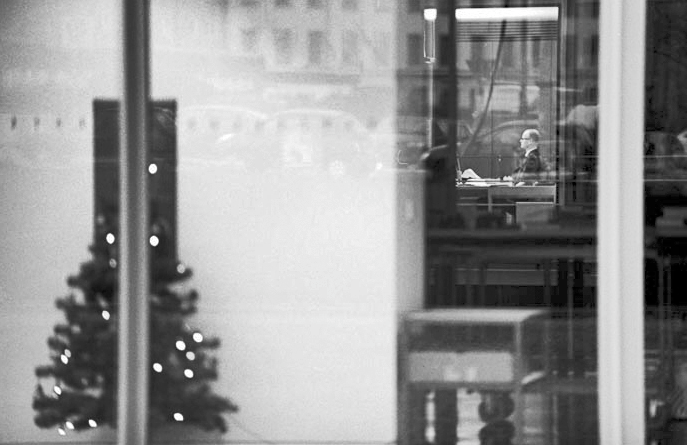
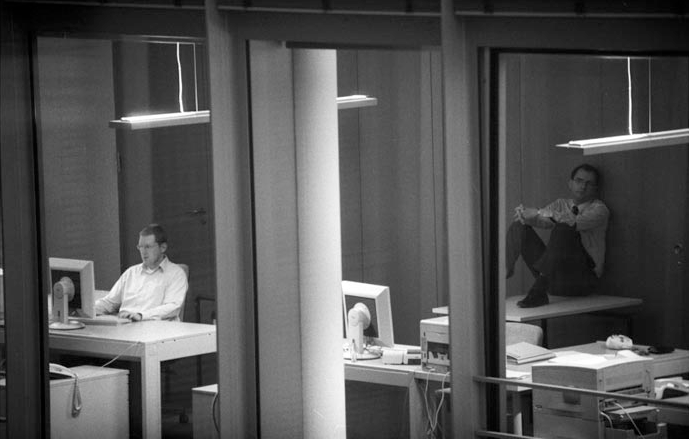
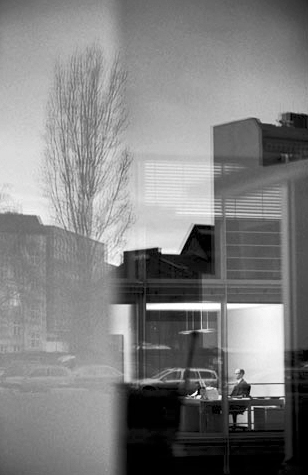
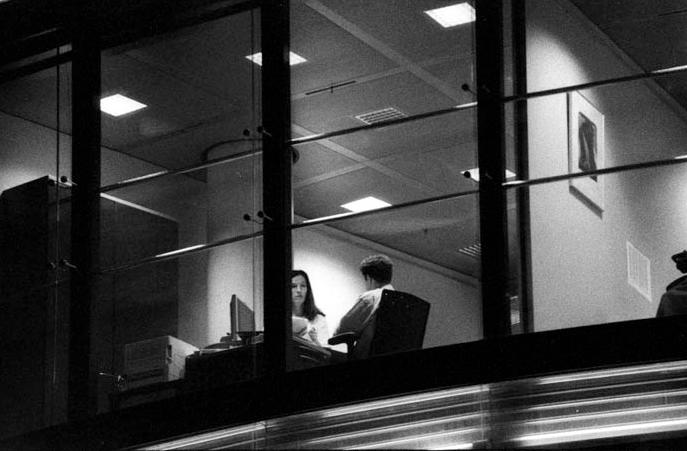
Here is a photo project on workaholics by Francesco Nencini to give you an example of greatness:
Here is the caption which was posted on Rank.APhotoEditor.com when I first came across the project:
Maybe they hold on to their seat because they’re afraid of losing their job.
Maybe they don’t want to go home because it’s worse than at work.
Maybe they have nowhere to go and no one to talk to.
Suggest a reason and enjoy this voyeuristic look at yourself.
YUICHI HIBI moved to New York from Japan in 1987, when he was 22. He was an aspiring actor, but spoke no English. For him, the city was bleak, grimy and alienating, the New York of “Taxi Driver” and “Midnight Cowboy,” gritty films he had watched as a teenager in Japan. He spent many late nights sitting in bars, watching people and wanting to be seen as one of them.
Yuichi Hibi often photographed fellow denizens of the night
In 1992, Mr. Hibi began walking the streets from midnight to dawn with a point-and-shoot camera, recording the Manhattan he had come to love. Intoxicated by the silence and the solitude of the night, he took marathon strolls in the city’s darkest corners, an activity that inspired in him a mental state akin to meditative ecstasy. His photographs of nighttime Manhattan capture the dreamlike romance of these all-night journeys.
Mr. Hibi often photographed fellow denizens of the night: a man collecting cans in Herald Square, a woman walking her dog on Lexington Avenue, two men conversing at Grand Central Terminal. His images without people — a parking lot or a bus shelter — are illuminated by a street lamp or an advertisement, elements that bring human warmth to the shadowy streetscape.
Mr. Hibi’s Manhattan has largely disappeared. “Those empty spaces, dark alleys and deserted streets are the victim of a brighter, reconstructed world that has lost its appeal for me,” he said recently in an e-mail message. “New York is beginning to resemble any other international city and has lost its edge, in spite of its breathtaking verticality.”
Now an accomplished filmmaker, Mr. Hibi continues to take pictures. This fall, Nazraeli Press published “Neco” (“cat” in Japanese), an intensely observed and beautifully designed book that aims to capture the essence of the feline. He has not, however, taken a photograph of New York since 2002.
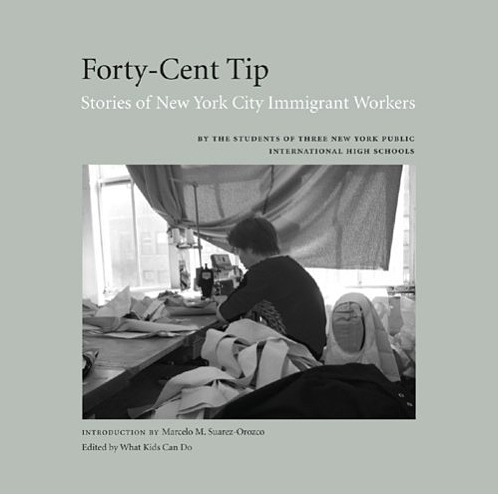
“That’s the title of a very remarkable book, the work of sixty students from three different New York City public high schools — Queens International HS, Brooklyn International HS and Manhattan International HS. Through essays and photographs, Forty Cent Tip tells the tales of immigrant workers in New York City, from the Columbian woman who cleans the floors of a dentist’s office by night, dreaming of the day her daughter could become a dentist, to the asbestos worker from the Czech republic who worries that he is “breathing my own death.” It is the story of the dreams and the sorrows of the men and women who make this city great — an Afghani taxi driver, a Chinese manicurist, a laundromat worker from Indonesia, a hospital clerk from Cameroon, and a Bengladeshi street hawker, among others.
The book was the result of work the students undertook in their respective schools, with the coaching of their teachers. All three International High Schools teach students who are recent immigrants and English Language Learners, and many of the immigrant workers portrayed in the book are their own relatives and friends”.
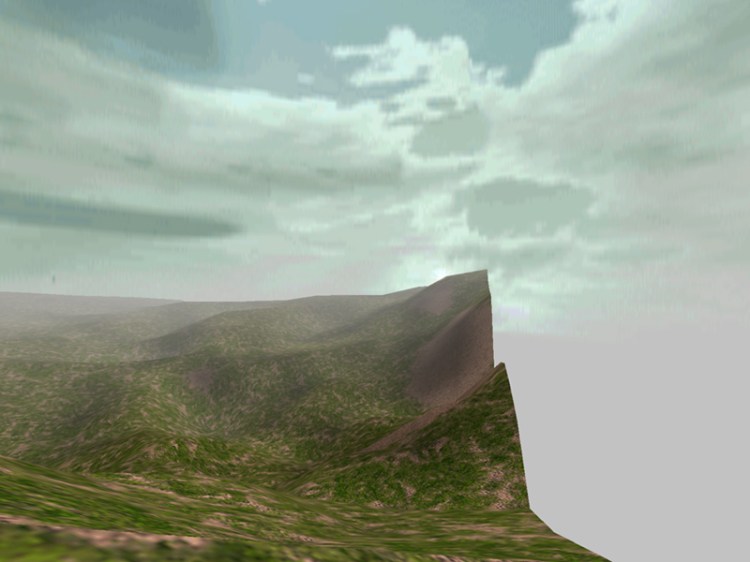
I recently came across the work of Oliver Warden through a friend. Oliver falls into an interesting category of photography, one that, in my opinion, has yet to be explored or defined. He’s actually two artists, a painter under the name of Oliver Warden, and a photographer named ROBOTBIGFOOT. In his photography, Oliver takes screen shots of video games and prints them as large, fine art prints. Not only are they beautiful, but the result is an amazing way of challenging ideas about the future of photography and the validity of these alternative realities. Oliver was kind enough to answer my questions about his work. The bottom line: Thank god there are photographers pushing to expand our definitions of…well…everything.
“It took a while for me to wrap my head around the idea that I was a photographer because I always associated the photographer with the camera. Once I let this go it opened up a entirely new idea of what that meant. The computer screen became not a lens where light enters through, but a porthole that light emanates from. ” – Oliver Warden
Rush B Tunnel, Screenshot on Paper, 30"x40"
Jacqueline Bovaird, Glasshouse Assignment: How did you get started/interested in art?
Oliver Warden: In first grade my class had an assignment for St. Patrick’s day. We had to draw two pictures. The first involved coloring inside the outlines of a leprechaun. The other was a landscape. Our assignment was to color in the leprechaun, cut him out and glue it to the landscape page. I did this and showed it to my teacher. She immediately took me to the principals office. He immediately called my parents encouraging them to enroll me in art classes. What I had done was drawn the landscape as a room, in a classic one point perspective. All the furniture and objects descended in space. I guess this was unusual because come the next available opening I started Saturday classes at the Cleveland Museum of Art. It was all over from that one point on.
JB: What led you to making this type of art?
OW: Today I’m ferrying in-between two bodies of work. One is made by Oliver Warden and the other is created by my online persona ROBOTBIGFOOT, who I’ve been for roughly ten years now. I make paintings as Oliver Warden and work as a photographer inside video game landscapes as ROBOTBIGFOOT. I always say that every decision I make is informed by every other decision I’ve ever made. Every work is an accumulation of everything that has come before it. Talk about pressure!
Rush Garage, Screenshot on Paper, 30"x40"
JB: What is your methodology in creating these pieces?
OW: For the photographic works, I take screen shots inside various video games. I usually take several thousands screen shots before I edit and select a small number as artworks, usually under 15. If it calls for it, the images are brought into Photoshop and manipulated to fit a conceptual framework. I print them on Hahnemuhle Photorag 308 with an Epson 9800 K3 Ultrachrome.
JB: How do you feel this work fits in with the current art scene?
OW: The most significant thing for me, in terms of understanding my work in the history of photography is the shift away from the use of the object called a camera. Inside these virtual spaces, there is no such object. The camera is merely a construct that can be placed anywhere. So, the camera serves as an echo or reflection of your mind’s eye. The only limitations are determined by the virtual engine that powers each game. It took a while for me to wrap my head around the idea that I was a photographer because I always associated the photographer with the camera. Once I let this go it opened up a entirely new idea of what that meant. The computer screen became not a lens where light enters through, but a porthole that light emanates from.
The Prestige 2008, Screenshot on Paper, 30"x40"
JB: Who do you feel is your main audience/who are you making this art for (you or us) ?
OW: I feel that every artist first makes art for themselves. They have an impulse or idea, a problem or activity that produces art and helps them to understand something deeply private but visibly public. If they serve other obligations first, like making money or creating beauty or quality or function, then they serve the public first and are probably designers. I like the idea that art is useless and design is useful and the play between these two things gets even more interesting when art enters the public sphere!
The Edge of the World, Screenshot on Paper, 30"x40"
JB: How do you feel virtual reality filters into our own reality, and then, in there, into the art world?
OW: One of the other projects I’m working on right now is my feature length animated film, The Wind. I am using machinima, or video game driven animation. In my story, our characters, who are video game players and high school students, ferry in between multiple versions of reality and fantasy. The thing I’m starting to suspect is that fantasy is less of an alternative to reality and more of a lifestyle choice, like choosing to be healthy or educated. In other words, if you have the means, you then have the choice to never leave your fantasy, thusly making it your reality. I wonder if the art world is an insulated fantasy community as well, protected by the ills of the world. It might be best to view it not as the pinnacle of culture but a subculture like any other that you can buy your way into. Like my characters in The Wind, it takes a epic awakening to jolt people out of this stasis. The economic problems that we all are facing is that jolt for the art world. My only hope is that like my characters, it serves as a renewal process that makes us re-evaluate our decisions and have the courage to transform into something new.
The Edge of the World, Screenshot on Paper, 30"x40"
JB: How do you feel your alter ego of ROBOTBIGFOOT serves your artistic purposes? I think the reference to game player’s screen names is great. Why keep that name for your real world photography?
OW: I Googled myself a few months ago. Roughly five links came up for Oliver Warden. However, around 8 pages of links came up with ROBOTBIGFOOT. It was then that I confirmed what I already suspected: online, I’m ROBOTBIGFOOT. This extends into all the work that I create using an online experience, including my video game imagery. It’s simply who I am online. It also serves as a contemporary reason to fall into the artistic tradition of creating an alter ego. This is important to me because of my interest in superheroes and their symbolism of transformation, a subject that sits at the heart of my work. I feel that superheroes stand in not for mythic supernatural gods, but for the struggle of artists to be understood by the general public. The writers and artists who create superheroes give them special abilities that are not understood in the Smallville’s of the world, forcing the heroes to go to big city and test their skills through emotional and physical turmoil. It’s there that they become adult men and women – super styled. The only difference is that in comics the public understands super strength and the joy of flying, where on Earth we’re shackled by mortal man’s ignorance as to where artistic talent comes from and what a f^@king F-Stop is!
The Great American, 2007, Oil on Canvas, 108"x144"
Px3 is an abbreviation for Prix de la Photographie Paris, a widely esteemed photography competition held annually in Paris. The competition judges a wide range of categories including photojournalism, child portraiture, and many amateur categories. Arguably, the two most sought after awards are Photographer of the Year and Best New Talent. Ryan won Best New Talent for the image below! The winning images were displayed at Galerie Acte 2, one of the most prestigious art galleries in France.
“The ‘Prix de la Photographie, Paris’ (Px3) strives to promote the appreciation of photography, to discover emerging talent, and introduce photographers from around the world to the artistic community of Paris. Winning photographs from this competition are exhibited in a high-profile gallery in Paris and published in the high-quality, full-color Px3 Annual Book.”
CONGRATS RYAN!
Can’t get enough of Ryan’s work? We know, we know…
Thankfully, you can see his entire portfolio on our site here. That not enough? Call me and we can chat about Ryan as long as you like!
I think the term “environmental portraiture” is underused.
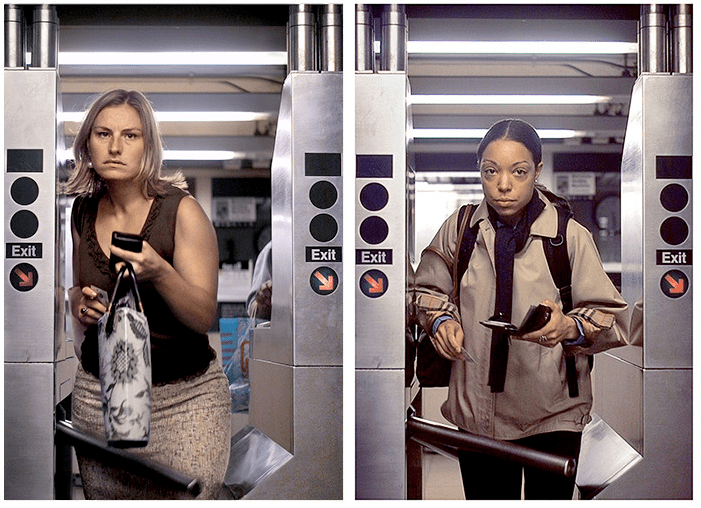
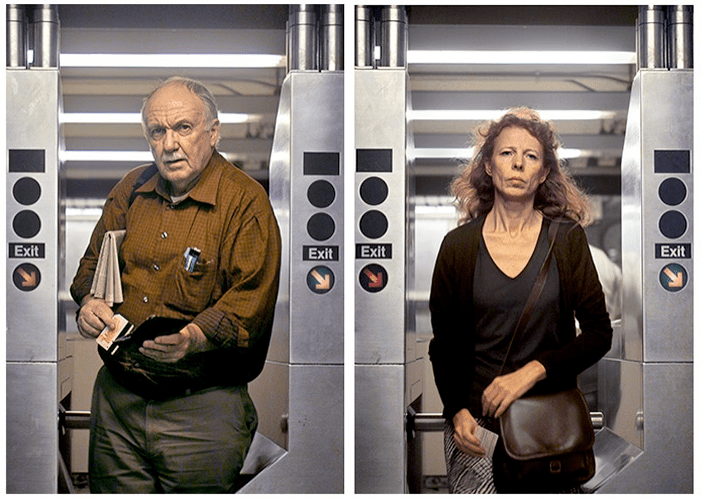
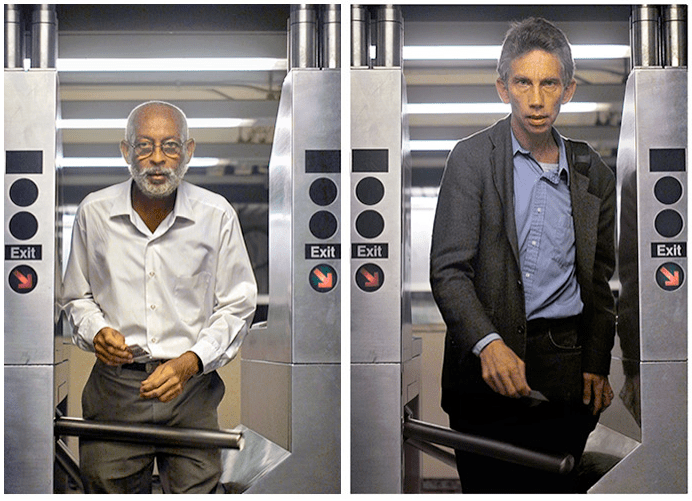
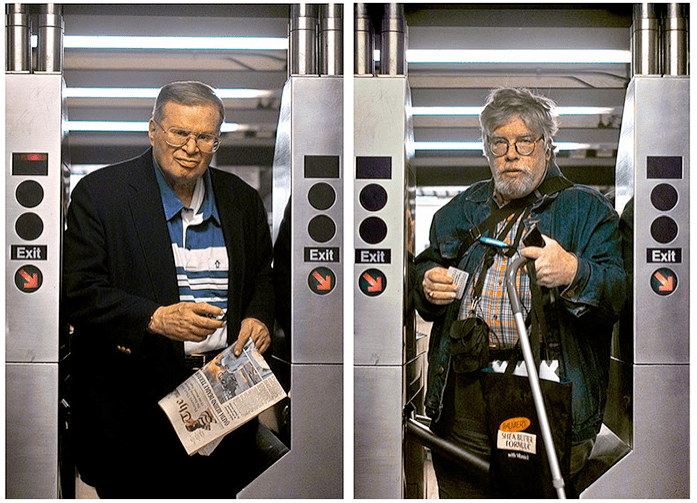
What does it even mean? Can’t any portrait be seen as an environmental portrait if it is considerate of the subject’s environment? How can it be ignored in the first place…even being on a white seamless is going to effect the subject’s context. Bill Sullivan’s project “3 Situations” utilizes the environment to bring focus to the subject. He photographs people coming through the turn styles in subways. In “3 Situations,” Sullivan photographs people going through the subway turn style, in elevators, and sitting in Times Square. In all of the sections, the subject is the only factor to change. With the unifying element being the situation, do we ignore the environment or does it play the role of the second subject?
Here is a selection of Bill’s “More Turns,” part of the “3 Situations” found on his website.
After digging through more of Bill’s site, I also found his rules of situational photographs… very interesting!
Here they are:
1. The image or photograph must be candid
2. The context of the situation must be clearly established
3. The background behind every subject in a series must be the same
4. The photographer must always be visible to the subject(s) in the photograph
5. The moments the images are to be taken must be defined before the pictures are taken
6. Secondary image(s) can be attached to the primary image if needed to clarify an established context
7. The camera should not play a visible role in the situation unless its visible presence has a role in that scenario
Here is Bill’s writing on the project, found on his website:
I was tired of the conventions in which most photographs of people are taken. And I was tired of the results that often seem to pass for poetry. I needed something to be objective : I wanted the context to be clearly established . I wanted play a role in the situation, but I wanted the situation to take a photograph of itself for me . I would design the scenarios in which this could happen, and then the situation could be responsible for creating the picture. The poetry would be as much in the design of that scenario as from any photograph that might come from it. These situations would include me but I would disappear as any kind of typical photographer. I would simply play a role in the scenario. I would become someone waiting for an elevator, a man reading the New Yorker waiting for a friend to pass through the turnstile, or simply another tourist watching someone having his or her portrait done. The situations were mapped out, tests were made, and special clothing was worn. I became a spy for the obvious.
Situation 1: The Times Square Portraits (Time Port). I developed or redesigned a scenario that made use of an existing portrait-making setup. The scenario consisted of people sitting at night in Times Square while street artists drew their portraits for a small fee. Unknown to the subjects, from a distance of about five fee, I was able to make the camera disappear. As I stood there intently watching their portrait being made, I took their picture as I leaned in as close as physically possible to the eye of the artist drawing their portrait.
Situation 2: The Subway Turnstile Pictures (More Turns). I developed a situation so that various subjects could be defined by the constraints of exactly the same mechanical apparatus. The scenario consisted of someone passing through a subway turnstile. At the moment that the subjects passed through the turnstile, unknown to them, I took their picture stationed at a distance of eleven feet. I stood there turning pages of a magazine observing subjects out of the corner of my eye, waiting for only the moment when they pushed the turnstile bar to release the shutter.
Situation 3 : The Elevator Portraits (Stop Down). I developed a situation in order to manufacture group portraits. The scenario consisted of elevator doors opening and closing. At the moment the doors opened, unknown to the riders, I took their picture stationed at a distance of ten feet. I stood looking lost either next to a shopping cart or with my back facing the elevator doors, quietly taking frame after frame as the doors opened and closed.
This leads me to a conclusion… more photographers should write about their projects! Bill’s writing not only helps me understand his work but also makes me trust him as an image-maker, lending enormous credibility to his efforts. He makes not only a commentary about photography but also about photography’s role in criticizing social norms. Bravo Bill. Can’t wait to see more!
I have this fascination with the decision making process and how it affects the creative process. Have you ever been in a creative situation and no matter what happens you can’t get there. When this happens I find myself recalling a phrase that a psychology major in college turned me onto “reverse the obvious”. It’s amazing what the results can be. Try it sometime.
This brings me to my latest post, the Sunday New Time’s article on Jonah Lehrer, Mind Games. See the excerpt below. SWJ
Questions for Jonah Lehrer
Interview by DEBORAH SOLOMON
Published: December 12, 2008
Your forthcoming book, “How We Decide,” is the latest entry in a growing field that might be called the science of decision-making. How do you explain the fascination with decisions?
For the first time, neuroscience can be applied to everyday life. The research on the neurotransmitter dopamine, for instance, can teach us why we play slot machines and overuse our credit cards.
Michael Prince for The New York Times
Are you a decisive person?
No, I’m pathologically indecisive. I wrote the book because I would spend 10 minutes in the cereal aisle choosing between Honey Nut Cheerios and Apple Cinnamon Cheerios.
Maybe indecisiveness is the price of being an intelligent human being who understands that actions have consequences.
That would be a little too self-congratulatory for me. Indecisiveness means you’re not listening carefully enough to your emotions, which know what you really want and could be whispering, “Go for the Honey Nut Cheerios.”
How is that idea any different from the gut decision-making that Malcolm Gladwelldescribes in “Blink”?
Fast-blink decisions are not always useful. The brain is full of different tools, and you don’t want to use a hammer if the problem requires more than a blunt hit.
The above article led me to John Lehrer’s blog and his post on an event that is going on in NYC. See below.
This sounds like a fantastic event, a genuine dialogue between artists and scientists:
The taste of a ripe tomato, the hook of a catchy song, the scent of a lover’s hair. What is it, exactly, that drives us to seek these things again and again?Neuroscientists who study perception are starting to discover the inner workings of the sensory mind. Starting on Monday at the New York Academy of Sciences, researchers and artists will team up to explore this new research in a series of talks called Science of the Five Senses. Their conversations will raise a question for the amateur hedonist: If we had a better understanding of the signals our bodies send to our brains, might we take more pleasure from them?
The academy, which was founded in 1817 and now has a membership of more than 25,000 scientists, has recently reached out to the general public with its Science and the City lectures.
“I wanted our live events to be at the intersection of science and culture,” said Adrienne Burke, an editor at the academy who conceived the new series. “That’s how we ended up with a singer and a food writer and an ex-magician. There is a deeper and more common connection between science and art than people tend to recognize.”
For “Science of the Five Senses” Ms. Burke asked the scientists to invite artists to explain their work. “I’m used to booking scientists,” she said. “But I was amazed that all the artists said yes right away, even Rosanne Cash.”
Unfortunately, I won’t be able to make it to the first event on Monday, which features Ranulfo Romo and the filmmaker Kun Chang. But if anyone makes it to the discussion, please put your take in the comments below.
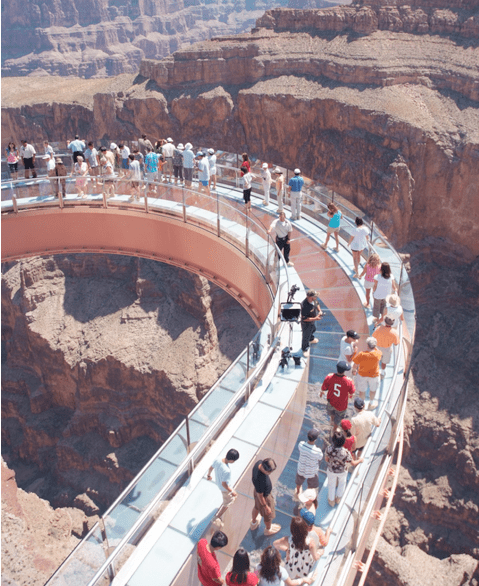
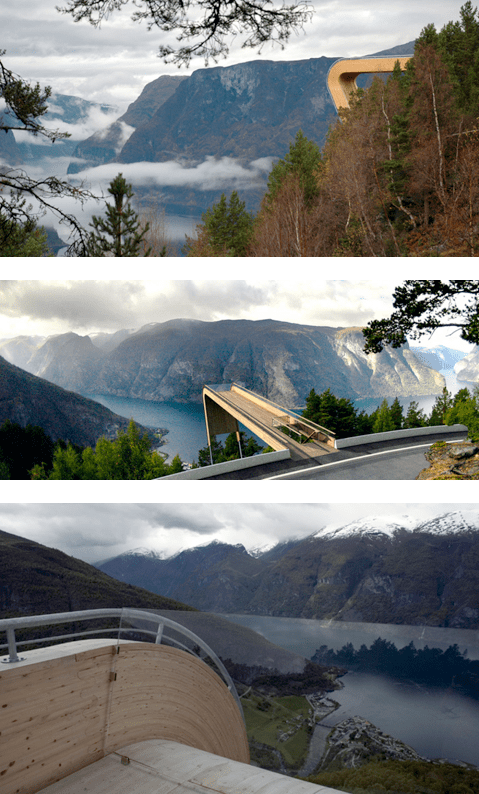
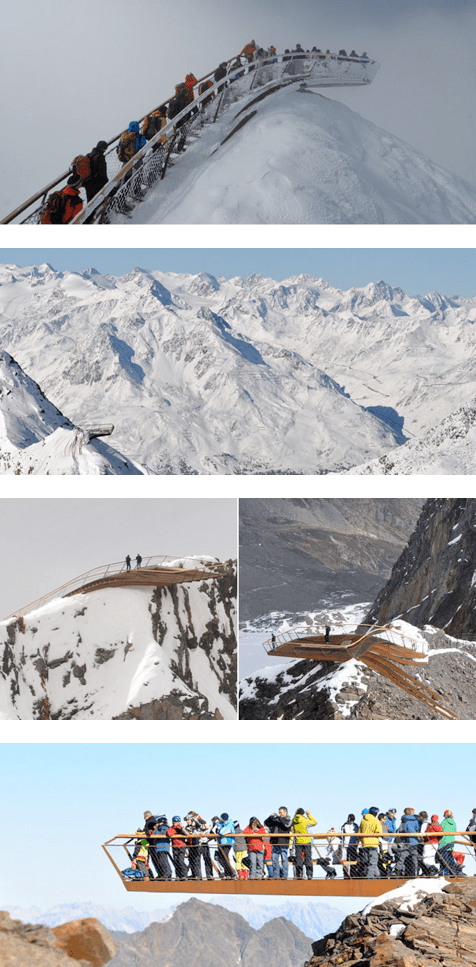
For your weekend viewing pleasure, I bring you some images of sky walks that are incredibly frightening and also strangely beautiful. Anyone notice that the tourists are all wearing more or less the same thing? See for yourself… I’m not sure what to think of the images of these structures.
Are they for tourist promotions or are they meant to make me feel acrophobic? Visually, they are an interesting way to incorporate public art into an experience. You don’t just look at these sculptures you interact with them and leave having received something from them. The question is then do these people experience the sculpture or the location? I wish I could conduct a poll of all the people leaving these places and see if they’re actually thinking critically about the idea of “space” or whether they are only looking for another postcard photo opportunity.
Google will be scanning magazines available for search within Google Books. Check out the post on Google’s blog.
“Over time, as we scan more articles, you’ll see more and more magazines appear in Google Book Search results. Eventually, we’ll also begin blending magazine results into our main Google.com search results, so you may begin finding magazines you didn’t even know you were looking for. For now you can restrict your search to magazines we’ve scanned by trying an advanced search.” Google Blog.
If looking at Evan’s work online isn’t giving you enough happiness and you find yourself needing more and more, well then go buy the new issues of SmartMoney and Bloomberg!
Here are a look at his photographs in December’s issues.
SmartMoney
“The Best Buying Opportunities in 50 Years”
Story by Russell Pearlman | Photographed by Evan Kafka
Dan Fuss, fund manager for Loomis Sayles Bond Fund
p. 52
Bloomberg
“Hedge Fund Agitator”
Story by Richard Teitelbaum | Photographs by Evan Kafka
What is that I hear? You are sending out hundreds of promos and emails a month and aren’t getting any calls from photo editors? Here is something for you to think about…
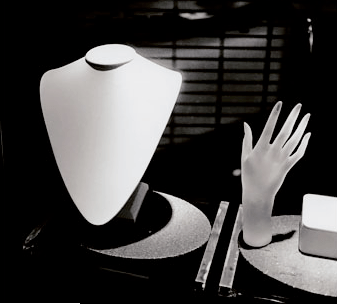
(Here is my visual representation of what happens to too bad promotions.)
Obviously marketing goes in swells….. When people were focusing on print mailers, emails were less annoying and received more attention. Now when email promos fill all our mail boxes, I tend to respond more to those archaic and touchable little 4×6 cards I get. SO what’s a photographer to do? Well…there is no right answer. From a photo rep’s perspective (mine), you have to hit your audience from all angles. Now I certainly can’t promise as thorough of an explanation as some of you might like. For that, take a class. I can, however, hopefully make you see your own marketing differently. Many of you are already doing this with blogs, without even knowing it had a fancy business term!
Whatever you decide to do, the term “inbound marketing” is cropping up all over the place… and you should know it! If only to sound smart at your next office holiday party.
Outbound Marketing vs. Inbound Marketing
Outbound marketing is more or less how it sounds. It is the promotions we put into the world (direct mailers, calling clients, email blasts, portfolio reviews, etc.). This can only be so effective when we all get ten million emails a day and junk mail from companies who absolutely insist that we are pre-approved for one scam or the next. I’m not saying outbound marketing is not effective, only that it can’t be your only recipe for commercial success.
Inbound marketing, on the other hand, is helping yourself get found by those who need you. Hmm….tricky? Not so much. Essentially, this means make yourself interesting! Make yourself easily search-able through having a blog or being linked to on others’ blogs. You are no longer Mr. Photographer named Joe Schmoe. You are Joe Schmoe, photographer and person with a valuable opinion! This is, in many ways, the purpose of blogs. Suddenly it isn’t just your images which are recognized but also your words, your ideas, your rants, and your silliness. Getting people to read your silliness is your problem…can’t help you there.
Don’t you get really excited when you find a blog or a neat website that no one else has found before? I know I do! So turn yourself or your photography into the next great thing. THAT, my friends, is inbound marketing. And it will become more and more relevant as it becomes increasingly easy to pester each other with emails/phone calls/pop up windows. The next trick is, once you have your audience to keep them coming back….
Sorry for the mini-lecture but…it is my own version of inbound marketing.
GET IT?
Tell me what you think! Leave a comment or email me, Jacqueline Bovaird, at jacqueline@glasshouseassignment.com
Tonight at the 2008 Holiday Party for the American Society of Picture Professionals, Jerry Tavin will be awarded the Jane Kinne Picture Professional of the Year Award!
Photo Credit: Devin Wheeler
Press Release from ASPP:
The American Society of Picture Professionals (ASPP) is pleased to name Jerry Tavin as its 2008 Picture Professional of the Year. The award will be presented at an ASPP event in New York City in December.
Jerry follows in the footsteps of previous award winners: Jane Kinne, Larry Levin, Anita Duncan, Niki Barrie, and Nancy Wolff, who all fulfilled the following criteria: being a current ASPP member who has demonstrated one or more of the following qualities — significant contributions to photography, a single outstanding achievement and long-time service to the association or its members. Executive Director, Cathy Sachs, says “If anyone has demonstrated long-time service to our industry it is Jerry. He has touched so many lives and is universally beloved by his colleagues, friends and students whom he has mentored.”
Jerry Tavin has had a long, illustrious career in the photography, travel, music and recruiting industries. He was trained as an attorney, and then founded a successful chain of travel agencies. He later moved to Germany and became a music manager for one of the top jazz singers there. After marrying Janou Pakter, Jerry helped launch her successful global executive search firm 24 years ago.
In 1994 Jerry and Janou created nonstock, a high-end worldwide photography collection that offered an alternative to other more traditional stock agencies. Nonstock represented some 500 advertising, fashion and fine art photographers who contributed more than 40,000 images. The agency was highly respected for its unique, cutting edge and compelling imagery. In addition to establishing worldwide distribution for the nonstock brand, Jerry also represented many other collections for U.S. distribution.
After selling nonstock to PictureArts in 2004, Jerry could have chosen to retire. Instead he continued to work in the photo industry, managing a collection of vintage imagery and then partnering in 2007 with the French agency PhotoAlto to start a new rights-managed online collection called IC Worldwide, an “oasis for distinguished photographers,” which reflects his leadership and vision.
Jerry’s enthusiasm for photography and his entrepreneurial spirit are unmatched in this industry. He has always been an advocate not just for photography, but for the photographers themselves. He is known for his devotion to maintaining the highest standards in the business of stock photography and never compromising on quality and ethics. In addition says long-time admirer, Beate Chelette, “He is genuinely interested in the well-being of those around him and especially his staff and colleagues. He is always willing to share his business expertise and experience openly and lend a helping hand.”
“A really good guy”, “wise, funny, gregarious, musically talented soul” are some of the tributes being paid to Jerry. ASPP Board member, Michael Masterson, reflects the opinion of many colleagues by saying: “In my own experience, Jerry has been a steady friend, ally and mentor, always supportive, caring, enthusiastic and incredibly knowledgeable. There is no one in our industry that is more deserving of this honor.”
Miha Matei is a wonderful food and lifestyle photographer and is the newest member of our team at Glasshouse Assignment! Below is her bio and a sample of her work. I’ll let you know as soon as her portfolio is fully launched on our site. Until then, here is a preview.
Bio:
Miha was born in Bucharest, Romania, but spent summers in the Romanian countryside on her grandparents’ farm. She climbed apple and cherry trees and ate farm fresh food every day. Her family moved to New York when she was eleven years old, but the color and the beauty from the farm have influenced her photography career to this day. Last year, Miha worked with award winning chef Matthew Kenney in New York and Maine on two raw food cookbooks, which was released in spring of 2008. She continued to work on Kenney’s book of desserts due out this coming spring. Her other clients include Real Simple, Country Living, Food Arts, Taunton Press, and Organic Gardening. Miha now lives in Brooklyn with her husband Marc and son Medby.
Wow. Our family has grown quickly! Welcome Miha!
Don’t worry, we are making these additions to our roster with the consideration that we will always be a boutique agency, specializing on the personal relationships we have with our photographers and our clients.
If you’d like to know more about Miha Matei and her photography, feel free to contact me (her rep), Jacqueline Bovaird, any time!
“Art,” despite what most artists are rebelling against, is a commodity. While it may be a product that is life altering and earth shattering and truly brilliant….once that piece of brilliance is for sale it becomes a commodity. Dear artists, this does not mean the world has gone to hell… it only means there is money to be made from your inner turmoil. You certainly don’t have to turn your art into money if it bothers you. How you’ve grappled with the reality of this is your own business.
Now here is an interesting idea…is the artist the commodity? Silly question..Of course! Can art only a reference to the artist or can it be for sale on its own? Can art be art without identity of an artist? How is it different if it is created “for the sake of it” versus “for the sale of it”…
Jason Polan is experimenting with the idea that he as an artist is the product and that his time can be profitable. He is selling two packages of his free time: one day and one hour time slots where, if you so choose to purchase them, he will devote to making art for you. You then receive in the mail whatever doodles and such he made within that hour/day.
Huh. So is it the art, the artist, the time, or the creativity packed into that time that is for sale? Is buying an artist’s time worth the money? Is there a guarentee of a product? What do you think?
Ryan Schude, one of Glasshouse Assignment’s newest family members, has been chosen for PDN’s recent Faces competition!!CONGRATS RYAN!
Ryan’s photograph is honored in the self-portrait category. Check it out and also check out the sneak preview of his portfolio here. We’ll keep in touch and let you know when his full portfolio is launched on our main site.
If you’re thumbing through the magazine at this very moment, we are certainly partial to page 58.
We have a new member of our family! Evan Kafka has joined the team here at Glasshouse Assignment! As his rep I speak for us all when I say we couldn’t be happier about the new addition.
As a reward to our loyal blog audience, I’ve posted a some of his images here AND a preview of his work for you to see before his portfolio is officially launched on the site. Click here for the preview.
ENJOY!
Like what you see? I thought so.
For more information on Evan or any of our other photographers, contact Jacqueline Bovaird.
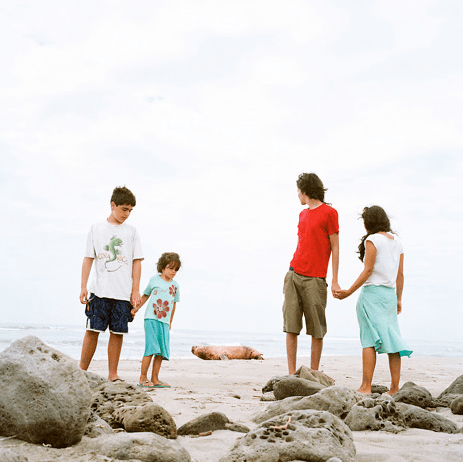
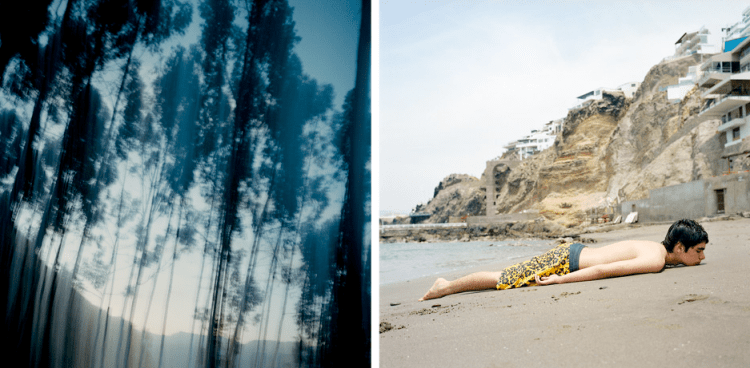
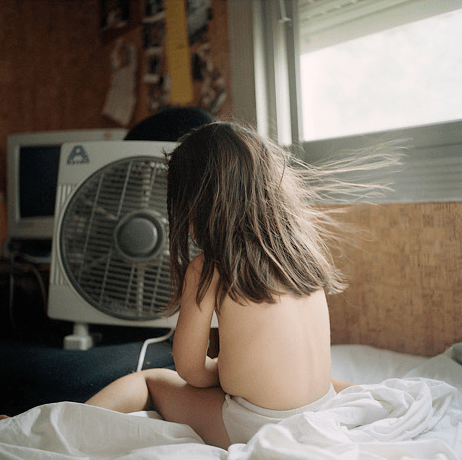
The notion of fairy tales is well explored within photography. That being said, I find Trinidad Carrillo’s subtle approach to the idea refreshing. While I think all her work is wonderful, I never really got it until seeing the edit for her new book, Naini and the Sea Wolves. Her world is gentle and intimate. She seems to find the magic – and the awkwardness – in the common moment…isn’t that what photography is all about? For your viewing pleasure, here are some of my favorites.
“I recall myself attending a dance school for children. There was a door, always locked, with the word ‘photography’ on it. One day I knocked, I was let in and never came out.”












 In
In 


 Here is the caption which was posted on Rank.APhotoEditor.com when I first came across the project:





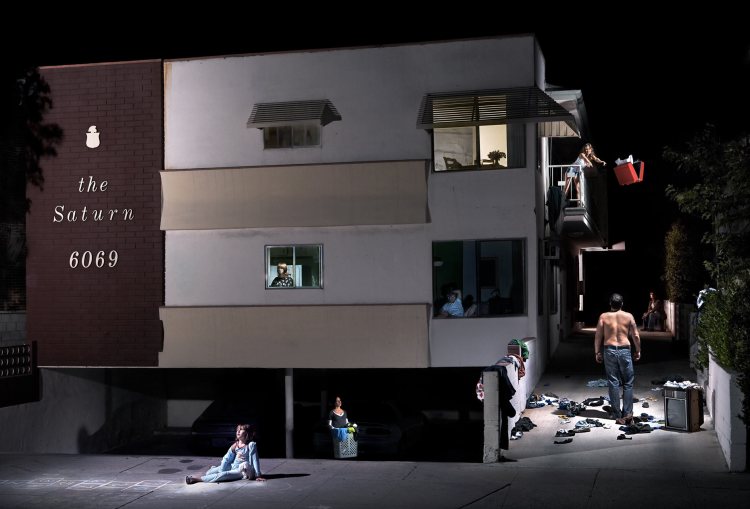








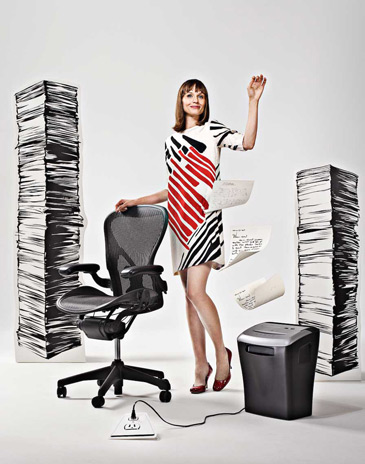 (Here is my visual representation of what happens to too bad promotions.)




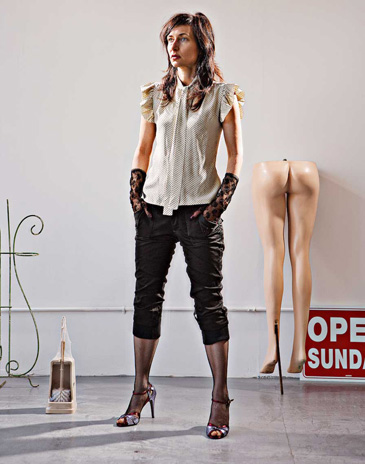


 Glasshouse Images/Stone Thrower